Wrens
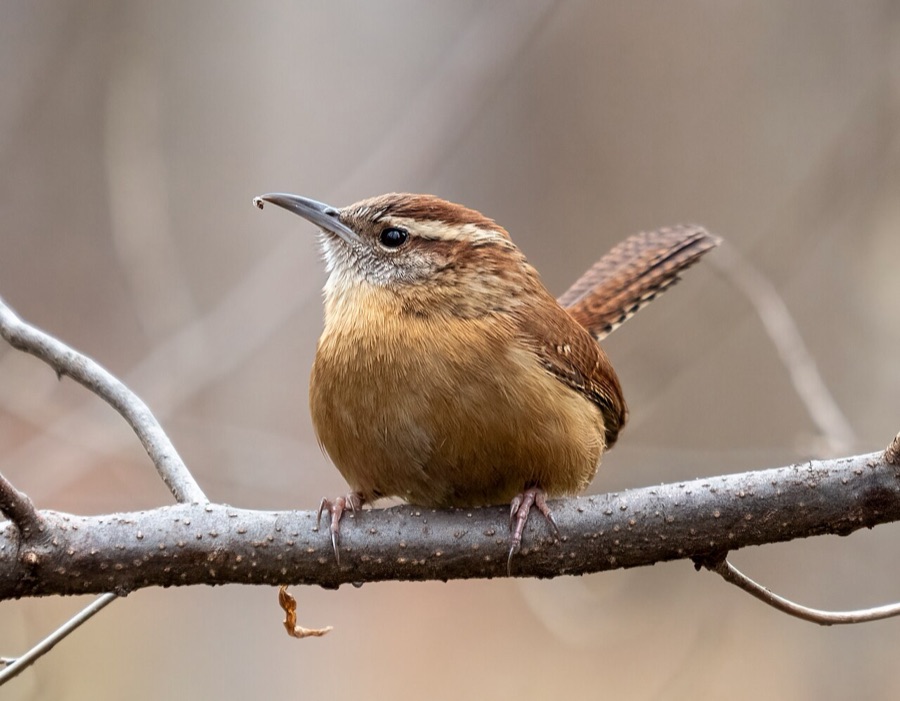
Carolina Wren
Thryothorus ludovicianus
A loud, busy wren that forages low and often feeds beneath feeders. Suet, peanuts and mealworms are the reliable draws.
- Food to offer
- Suet
- Peanuts
- Mealworms
- Feeder that suits it
- Suet cage, low tray or ground
- Size
- Small
- When to expect it
- Year-round (eastern North America)
- Region
- East
Photos of Carolina Wren
4 imagesFeeding Carolina Wren at a glance
For someone putting out food for the first time.
What to put out
- Suet
- Peanuts
- Mealworms
Best feeder and placement
Suet cage, low tray or ground.
How it behaves at the feeder
Loud, busy and low. Often feeds beneath feeders and in brush, rather than on a hanging tube.
How to recognise it
Warm brown above with a bold white eyebrow and a cocked tail. Much larger than a House Wren.
Often confused with
House Wren — House Wren is plainer and smaller with a faint eyebrow; Carolina is warmer, larger and louder.
One thing to watch
It needs cover. A tidy garden with no brush or low shrubs will not hold one.
A bird limited by winter
Carolina Wrens are resident and do not migrate, so they face winter where they are. Severe cold and deep snow reduce their numbers sharply at the northern edge of the range, and populations take time to recover.
That has a practical consequence for feeding: a wren at your feeder in a hard winter is genuinely dependent on accessible food and unfrozen water, not just visiting for a snack.
Low, loud and busy
Carolina Wrens forage low — in brush, under feeders, along fences, in leaf litter. They are much more likely to be under the feeder than on it.
Suet, peanuts and mealworms are the reliable draws. A suet cage or a low tray suits the way the bird actually feeds.
Common questions
Why did my wrens disappear after a cold snap?
Carolina Wrens are resident and vulnerable to severe winter weather. Numbers at the northern edge of the range can drop sharply after a hard freeze or deep snow.
What should I put out?
Suet, peanuts and mealworms, offered low. They often feed beneath a feeder rather than on it.
Do they use nest boxes?
Yes, and they will also nest in odd cavities — a hanging pot, a shed shelf, a boot. They are not fussy about the box.