Wrens
House Wren
Troglodytes aedon
A small, plain wren that nests in cavities and forages in low cover. Mealworms are the easiest way to bring it to a tray.
- Food to offer
- Mealworms
- Suet
- Feeder that suits it
- Low tray or suet cage
- Size
- Small
- When to expect it
- Spring to autumn (migratory in the north)
- Region
- Widespread
Photos of House Wren
4 imagesFeeding House Wren at a glance
For someone putting out food for the first time.
What to put out
- Mealworms
- Suet
Best feeder and placement
Low tray or suet cage.
How it behaves at the feeder
Small and active, forages in low cover and will take mealworms from a tray.
How to recognise it
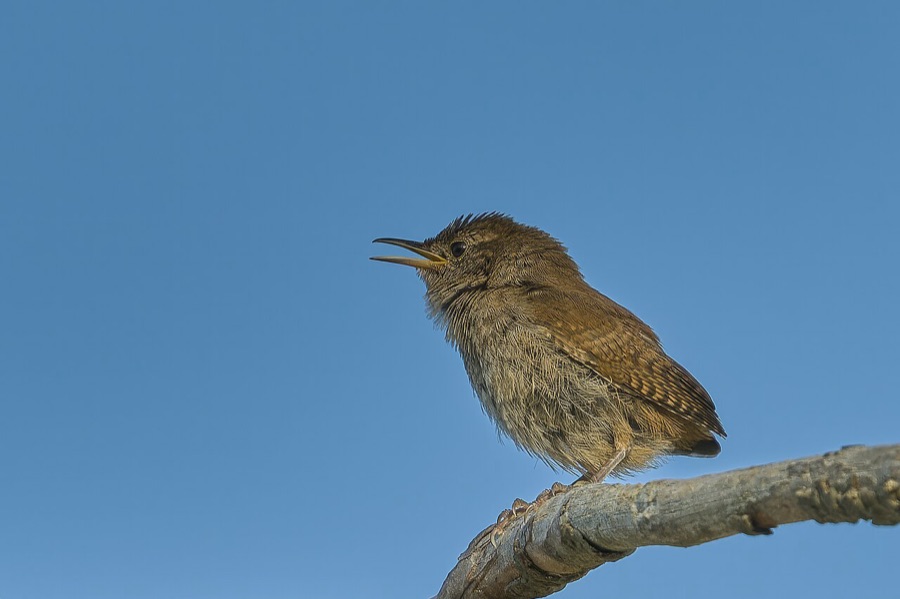
Plain brown above, pale below, with a faint eyebrow and a thin bill. Tail often held slightly cocked.
Often confused with
Carolina Wren — Carolina is larger, warmer brown and has a bold white eyebrow.
One thing to watch
A summer bird in the north. It nests in cavities, so a nest box may attract it more reliably than a feeder.
The nest-box problem
House Wrens are cavity nesters, and they are famously intolerant of competition. They will puncture the eggs of other cavity-nesting birds and fill unused boxes with twigs to occupy them.
If you maintain a bluebird trail or a row of nest boxes, this matters. House Wrens are native and protected; the response is box placement and monitoring, not removal.
Small, plain, and active
Plain brown above, pale below, with a faint eyebrow and a thin bill. It is smaller and less warm-toned than a Carolina Wren, and it forages in low cover.
Mealworms are the easiest way to bring one to a tray. Suet is also taken.
Common questions
Are House Wrens a problem?
They are native and not a problem in themselves, but they compete aggressively with other cavity nesters. Box spacing and monitoring reduce conflict.
What do they eat at feeders?
Mealworms are the reliable offering, with suet also taken. They forage low, so a tray or low cage works better than a high tube.
Do they migrate?
Northern populations are migratory; southern birds may be resident. In the north, expect them in the breeding season rather than year-round.