Finches
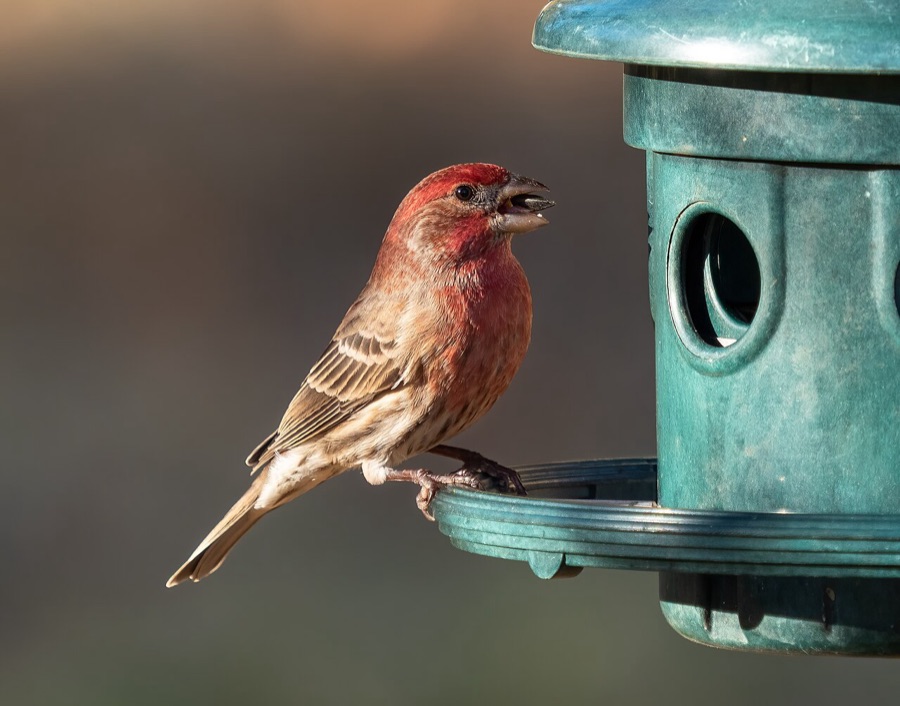
House Finch
Haemorhous mexicanus
An adaptable feeder bird that will use most seed feeders. Watch for crusty eyes, a sign of house finch eye disease, and clean feeders promptly.
- Food to offer
- Sunflower
- Nyjer
- Mixed seed
- Feeder that suits it
- Tube or hopper
- Size
- Small
- When to expect it
- Year-round (much of North America)
- Region
- Widespread
Photos of House Finch
4 imagesFeeding House Finch at a glance
For someone putting out food for the first time.
What to put out
- Black-oil sunflower
- Nyjer
- Mixed seed
Best feeder and placement
Tube or hopper.
How it behaves at the feeder
An adaptable, sometimes dominant feeder that will use most seed feeders and can become the most numerous bird at a tube.
How to recognise it
Males have an orange-red head and breast with brown streaked flanks. Females are brown and streaked with a plain face.
Often confused with
Purple Finch — Purple Finch is raspberry-red over the head and breast with a brown back; House Finch has streaking on the flanks and a more orange-red tone.
One thing to watch
Watch for crusty or swollen eyes — house finch eye disease. Clean and disinfect tube feeders, especially the ports.
Why this bird is everywhere
The House Finch is adaptable and uses most seed feeders. That flexibility is exactly why it turns up in gardens where other finches do not, and why it can become the most numerous bird at a tube feeder.
It takes sunflower, nyjer and mixed seed. If you are trying to attract a wider range of finches, a dedicated nyjer feeder alongside a sunflower feeder usually produces a better spread than one general mix.
How disease moves at a feeder
FeederWatch explains that not all avian diseases spread the same way. Conjunctivitis spreads through eye discharge, which makes tube feeders with ports a particular risk because birds rub their eyes against the openings. Salmonella and E. coli spread through droppings, which makes tray feeders — where birds stand in what others have left — a different kind of risk.
That is why the advice differs by symptom. For eye disease, disinfect tube feeders thoroughly, including the ports. For oral-faecal diseases, consider retiring tray feeders.
A cleaning routine that actually reduces risk
- Take the feeder apart.
- Scrub off debris with a brush.
- Wash thoroughly in warm water and dish soap.
- Rinse thoroughly.
- For disinfection, soak cleaned parts about 10 minutes in one part bleach to nine parts water.
- Rinse the bleach off and let everything dry completely before refilling.
- Wear gloves, and wash your hands afterwards.
Common questions
Should I stop feeding if I see a sick finch?
FeederWatch suggests cleaning and disinfecting more often, and considering a temporary pause. They also note that taking feeders down only helps if few people nearby feed — where feeding is common, it can concentrate birds at remaining feeders.
Is it safe to handle a sick bird?
No. Wear gloves when handling feeders, and do not handle wild birds without advice. Contact a wildlife rehabilitator if you find a sick or injured bird.
Do House Finches use nyjer?
Yes. FeederWatch lists House Finch among the birds that take nyjer, along with sunflower and mixed seed.