Thrushes
Mountain Bluebird
Sialia currucoides
A bird of open western country that will use a low tray for mealworms. It is less tied to gardens than the eastern bluebird and often feeds from perches.
- Food to offer
- Mealworms
- Fruit
- Feeder that suits it
- Low tray or platform
- Size
- Medium
- When to expect it
- Spring to autumn; some winter in the south
- Region
- West
Photos of Mountain Bluebird
1 imagesFeeding Mountain Bluebird at a glance
For someone putting out food for the first time.
What to put out
- Mealworms
- Fruit
Best feeder and placement
Low tray or platform.
How it behaves at the feeder
A bird of open country that will use a low tray but is less tied to gardens.
How to recognise it
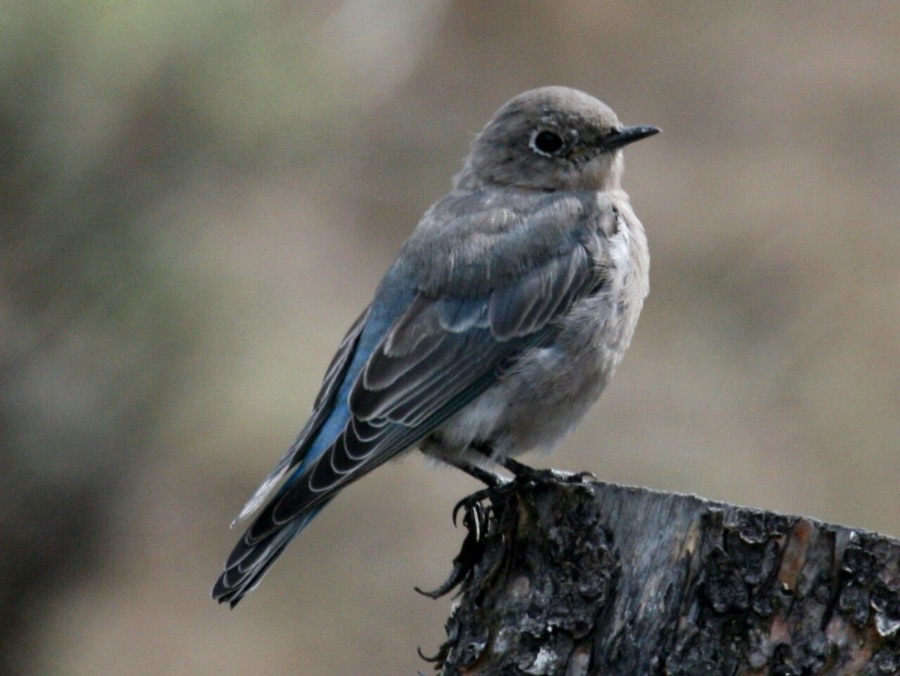
Male almost entirely sky-blue with no rusty breast; female grey-brown with blue in the wings and tail.
Often confused with
Eastern Bluebird — Mountain Bluebird lacks the rusty breast entirely; Eastern and Western both have one.
One thing to watch
Less a garden bird than the other bluebirds. Open country and perches matter more than the feeder.
All blue, no rust
Males are sky-blue across the body with no rusty breast. Females are grey-brown with blue in the wings and tail.
That absence of rust is the quickest separation from Eastern and Western Bluebirds, both of which have a rusty breast.
Open country, not gardens
This is a bird of open western country — meadows, farmland, mountain valleys. It is less tied to gardens than the other bluebirds, so a feeder alone is unlikely to bring one in.
Where it does use a tray, mealworms are the offer. Perches and open ground nearby matter more than the feeder type.
Common questions
How is it different from other bluebirds?
It is almost entirely blue with no rusty breast. The other two bluebirds have a rusty breast.
What do they eat?
Insects and fruit; mealworms are the feeder offer that works.
Will they come to a garden feeder?
Rarely in dense suburbs. They are birds of open country and need that context.