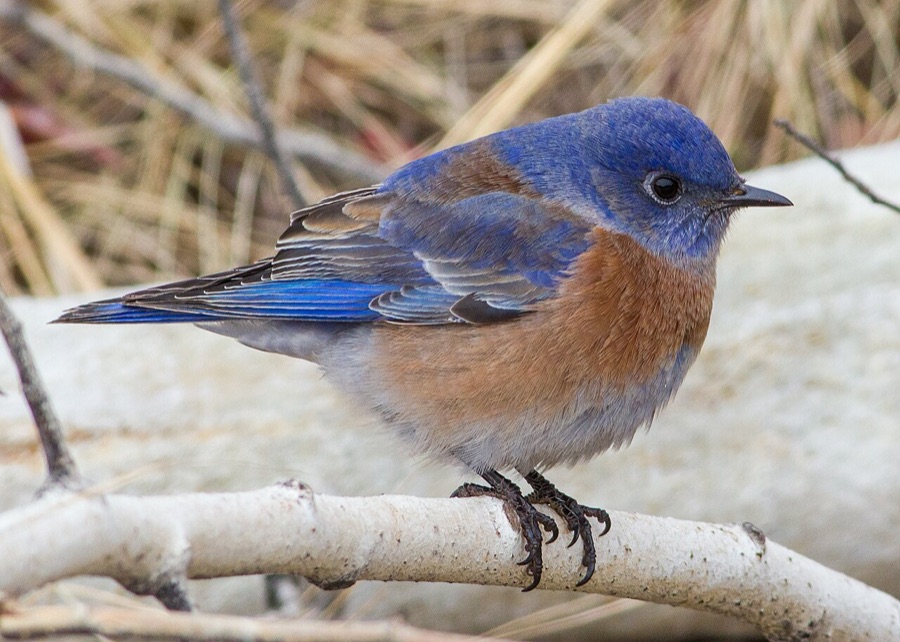
Thrushes
Western Bluebird
Sialia mexicana
The western counterpart of the eastern bluebird. Mealworms and fruit on a low tray are the standard offerings, especially in cold spells.
- Food to offer
- Mealworms
- Fruit
- Feeder that suits it
- Low tray or platform
- Size
- Medium
- When to expect it
- Year-round in many areas; local movements
- Region
- West
Photos of Western Bluebird
4 imagesFeeding Western Bluebird at a glance
For someone putting out food for the first time.
What to put out
- Mealworms
- Fruit
- Berries
Best feeder and placement
Low tray or platform.
How it behaves at the feeder
Uses low trays for mealworms and fruit, especially in cold spells.
How to recognise it
Male blue above with a rusty breast and a blue throat; female is greyish with a paler breast.
Often confused with
Eastern Bluebird — Eastern male has an orange throat; Western male's throat is blue.
One thing to watch
A western bird; the blue throat is the quickest separation from Eastern Bluebird.
The throat is the giveaway
Male Western Bluebirds are blue above with a rusty breast and a blue throat. Male Eastern Bluebirds have an orange throat and breast.
Females are greyer and duller, with a paler breast; range is the reliable separator where the two do not overlap.
Feeding
Mealworms and fruit on a low tray are the standard offers, especially in cold spells when insects are unavailable. Like other bluebirds, they are not seed eaters.
A quiet spot matters. Bluebirds tend to perch nearby, drop to the tray, and leave; constant disturbance reduces use.
Common questions
How do I tell it from an Eastern Bluebird?
The male's blue throat. Eastern males have an orange throat and breast.
What do they eat?
Mealworms and fruit. They are not seed feeders.
Do they use nest boxes?
Yes. Like other bluebirds, they are cavity nesters and use boxes where habitat suits them.