Nuthatches
Red-breasted Nuthatch
Sitta canadensis
A smaller, rusty-breasted nuthatch that appears in southern gardens in some winters. Suet and peanuts are the strongest draws.
- Food to offer
- Suet
- Peanuts
- Sunflower
- Feeder that suits it
- Suet cage or small tube
- Size
- Small
- When to expect it
- Year-round in the north; irruptive elsewhere
- Region
- North and west
Photos of Red-breasted Nuthatch
4 imagesFeeding Red-breasted Nuthatch at a glance
For someone putting out food for the first time.
What to put out
- Suet
- Peanuts
- Black-oil sunflower
Best feeder and placement
Suet cage or small tube.
How it behaves at the feeder
Small, quick and often in conifers. Appears in southern gardens in some winters.
How to recognise it
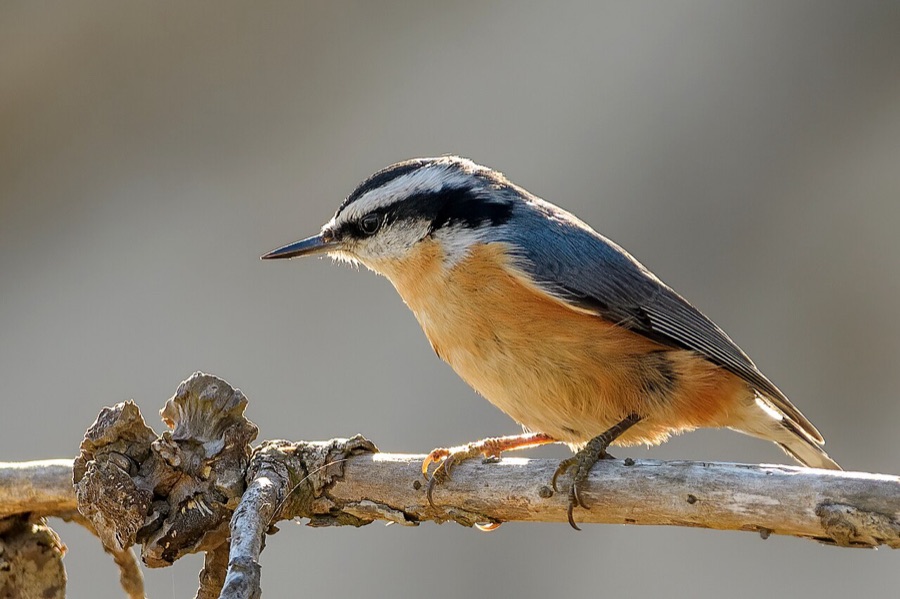
Rusty-orange underparts with a black eye stripe and a white eyebrow, blue-grey above.
Often confused with
White-breasted Nuthatch — White-breasted has a white face and no eye stripe; Red-breasted has a black eye stripe and rusty underparts.
One thing to watch
Irruptive in some years. Suet and peanuts are the strongest draws when it appears.
An irruptive conifer bird
Red-breasted Nuthatches are tied to conifers, and their winter movements depend on the cone crop. In poor cone years, birds move south in numbers; in good years, many stay put.
That makes them another example of the same rule as siskins and redpolls: presence is driven by northern food supply, not by your feeder.
Identification
Smaller and more colourful than the White-breasted Nuthatch, with rusty-orange underparts, a blue-grey back, a black eye stripe and a white eyebrow. The eye stripe is the mark to look for.
It behaves the same way — climbing down trunks and caching — but its smaller size means it can work finer branches and conifer needles.
The two common nuthatches
| Feature | Red-breasted | White-breasted |
|---|---|---|
| Underparts | Rusty orange | White |
| Face | Black eye stripe, white eyebrow | White face |
| Habitat | Conifers | Deciduous and mixed woods |
| Pattern | Irruptive in some winters | Largely resident |
Common questions
Why do I see them only in some years?
They are irruptive, moving south when northern cone crops fail. Absence in a given winter is normal.
What should I put out?
Suet is the strongest draw, with peanuts and sunflower also taken.
How do I tell it from a White-breasted Nuthatch?
Rusty underparts and a black eye stripe. White-breasted has white underparts and a plain white face.