Nuthatches
White-breasted Nuthatch
Sitta carolinensis
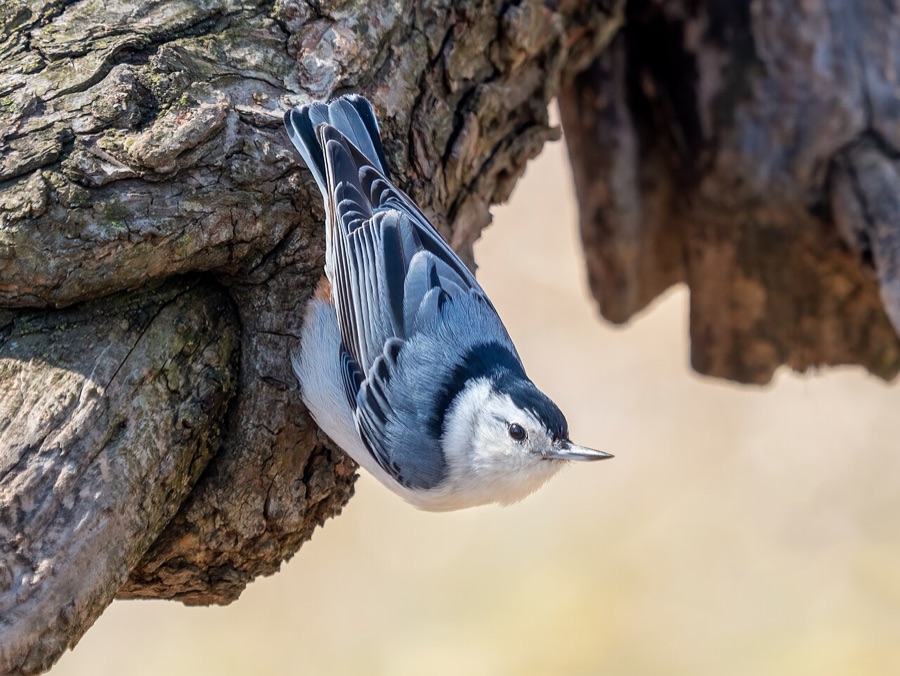
Climbs head-first down trunks — a good way to tell it from a chickadee. It takes sunflower and peanuts, and caches seed in bark crevices.
- Food to offer
- Sunflower
- Peanuts
- Suet
- Feeder that suits it
- Small tube, hopper or suet cage
- Size
- Small
- When to expect it
- Year-round (much of North America)
- Region
- Widespread
Photos of White-breasted Nuthatch
4 imagesFeeding White-breasted Nuthatch at a glance
For someone putting out food for the first time.
What to put out
- Black-oil sunflower
- Peanuts
- Suet
Best feeder and placement
Small tube, hopper or suet cage.
How it behaves at the feeder
Climbs head-first down trunks — a good way to tell it from a chickadee. Caches seed in bark.
How to recognise it
White face and underparts, black cap and nape, blue-grey back. Creeps down trunks head-first.
Often confused with
Chickadee species — Nuthatch has a long pointed bill and climbs down; chickadees have short bills and generally move upward.
One thing to watch
It takes one seed at a time and caches, so a feeder can empty without many visible visits.
Why it goes down
Foraging upside down lets a nuthatch inspect bark crevices from an angle that birds moving upward cannot reach. It is a different way of using the same tree, not a quirk.
That behaviour also explains why it takes one seed at a time and wedges it into bark to hammer open, rather than sitting at a feeder to eat.
What to put out
Black-oil sunflower, peanuts and suet are all taken. A small tube, a hopper or a suet cage all work; the bird's ability to cling means a cage accessible from below is no obstacle.
Because it caches, a feeder can empty without many visible visits. Do not assume a quiet feeder means no nuthatches.
Common questions
Why does it hang upside down?
It forages bark crevices from below, an angle other birds cannot easily work. It is normal behaviour, not a sign of injury.
Does it migrate?
It is largely resident across its range, so the same birds are likely to be present year-round.
What is the best single food?
Sunflower or peanuts. Suet is also taken, especially in winter.