Hummingbirds
Black-chinned Hummingbird
Archilochus alexandri
A western hummingbird that uses nectar feeders readily. The same 1:4 sugar-to-water mix applies, and the feeder still needs frequent cleaning.
- Food to offer
- Nectar
- Feeder that suits it
- Nectar feeder
- Size
- Small
- When to expect it
- Spring to autumn (western North America)
- Region
- West
Photos of Black-chinned Hummingbird
4 imagesFeeding Black-chinned Hummingbird at a glance
For someone putting out food for the first time.
What to put out
- Nectar: one part white sugar to four parts water
Best feeder and placement
Nectar feeder.
How it behaves at the feeder
Uses nectar feeders readily and defends them.
How to recognise it
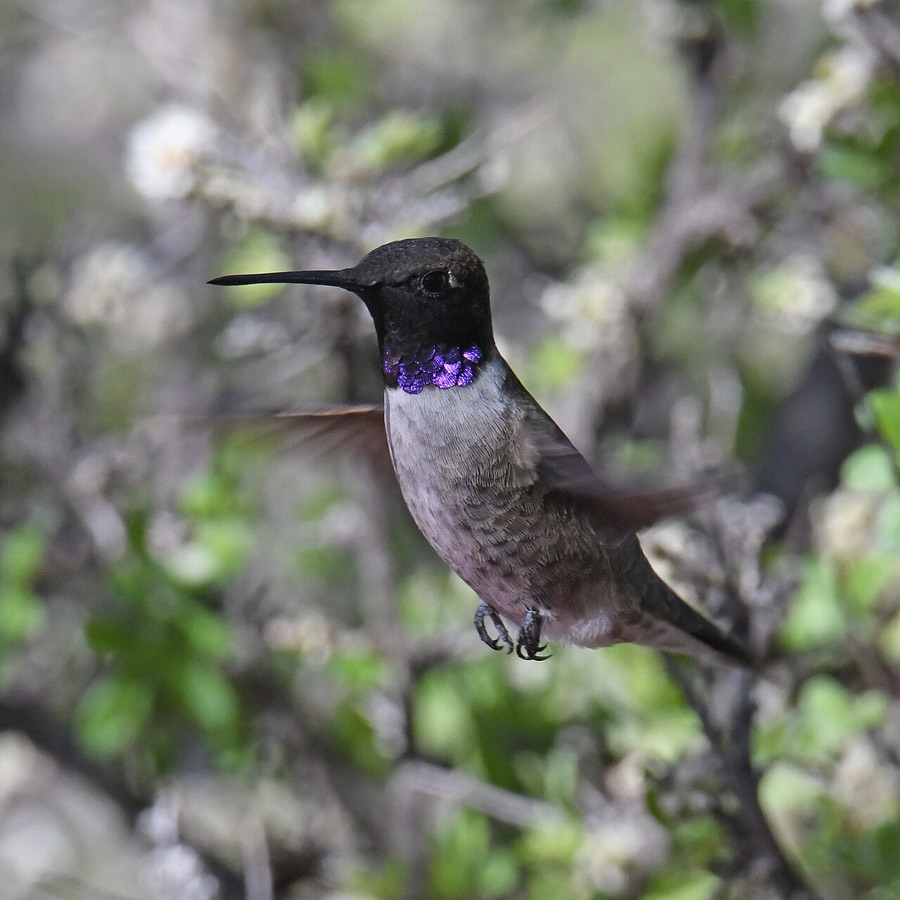
Male has a black chin with a narrow purple band below it. Female is green above with pale underparts.
Often confused with
Ruby-throated Hummingbird — Ruby-throated male has a full red throat; Black-chinned has a black chin and purple band.
One thing to watch
A western species. The same 1:4 mix applies, and the feeder still needs frequent cleaning.
The chin and the band
Male Black-chinned Hummingbirds have a black chin with a narrow iridescent purple band beneath it. In poor light the whole throat looks dark, which is why the bird is often identified by shape and range rather than colour.
Females are green above with pale underparts and no dark chin. They are extremely similar to female Ruby-throated Hummingbirds, and range is the practical separator.
Feeding
The mix is the same as for any hummingbird: one part white sugar to four parts water, no dye. FeederWatch's cleaning advice applies equally — every couple of days in warm weather, and immediately if the solution clouds or mould appears.
A feeder that is easy to take apart is worth more than a decorative one, because cleaning is the actual skill.
Common questions
What ratio should nectar be?
One part white sugar to four parts water. No dye, honey or sweetener.
How often should I clean the feeder?
Every couple of days in warm weather, and each refill if possible.
How do I tell it from a Ruby-throated Hummingbird?
Range is the most reliable guide. The male's black chin with a purple band differs from the Ruby-throated male's full red throat.