Hummingbirds
Rufous Hummingbird
Selasphorus rufus
A feisty migrant that passes through the west in spring and late summer. It is often the most aggressive bird at a nectar feeder.
- Food to offer
- Nectar
- Feeder that suits it
- Nectar feeder
- Size
- Small
- When to expect it
- Spring and autumn migration (west); rare in the east
- Region
- West
Photos of Rufous Hummingbird
4 imagesFeeding Rufous Hummingbird at a glance
For someone putting out food for the first time.
What to put out
- Nectar: one part white sugar to four parts water
Best feeder and placement
Nectar feeder.
How it behaves at the feeder
Feisty migrant, often the most aggressive bird at a feeder.
How to recognise it
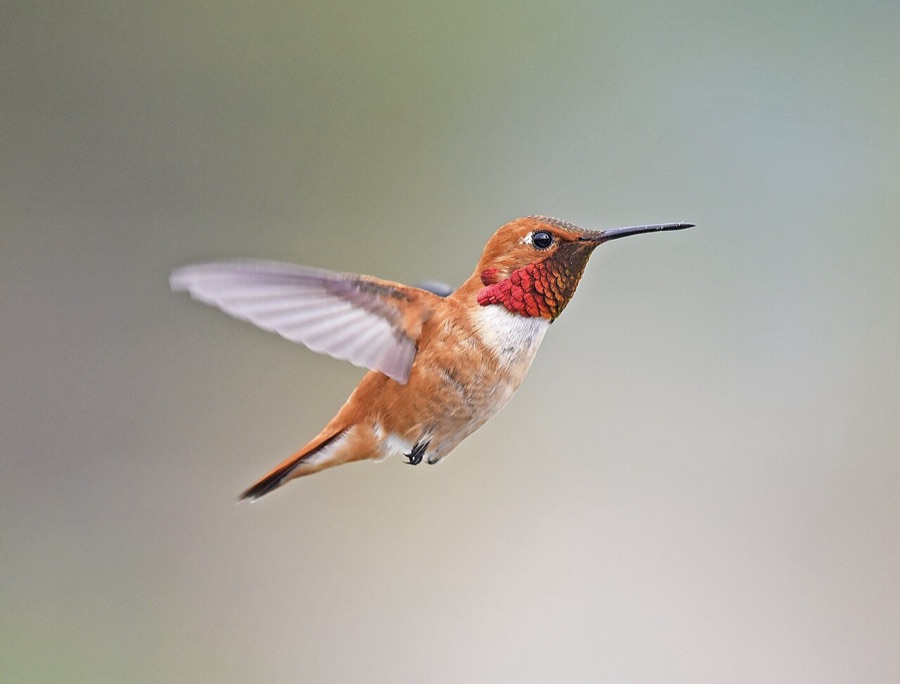
Males are rich orange-brown on the back and underparts with a red throat. Females are green above with rusty flanks.
Often confused with
Allen's Hummingbird — Allen's is extremely similar; range and tail-feather shape are the reliable separations.
One thing to watch
A migrant in the west. Keep the feeder clean and expect disputes.
A migrant with an attitude
Rufous Hummingbirds breed in the northwest and winter in Mexico, and they pass through much of the west on migration. They are famously aggressive, often dominating a feeder while they are present.
Males are rich orange-brown with a red throat. Females are green above with rusty flanks and a rusty tail base.
Feeding during a passage
The 1:4 sugar mix applies. Because the bird is passing through rather than settling, a feeder can go from busy to empty within a couple of weeks.
Keep the feeder clean and available during the passage. A dirty feeder during a migration stopover is a genuine risk, because birds are concentrated and stressed.
Common questions
Why do they disappear suddenly?
They are migrants. A burst of activity followed by quiet is normal as birds move on.
Should I take the feeder down in autumn?
No. Leaving it up does not prevent migration. Keep it clean until you have seen no hummingbirds for about two weeks.
How do I tell it from an Allen's Hummingbird?
They are extremely similar. Range and subtle tail-feather shape are the reliable separations, not colour alone.