Jays & crows
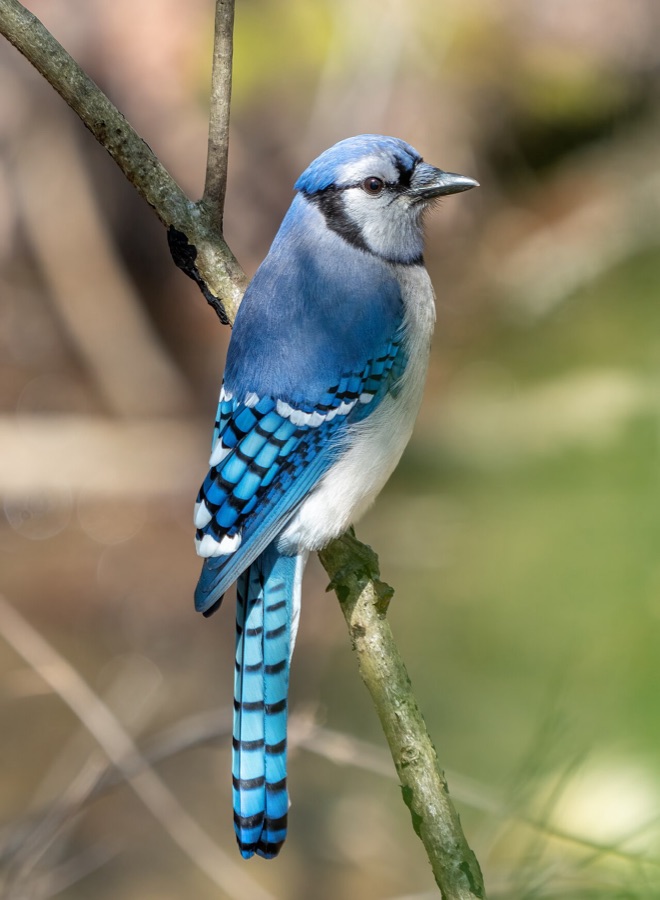
Blue Jay
Cyanocitta cristata
Jays take peanuts in the shell and carry several away to cache. They are bold and will monopolise a small feeder, so use a larger or weight-sensitive design.
- Food to offer
- Peanuts
- Sunflower
- Feeder that suits it
- Platform or large hopper
- Size
- Large
- When to expect it
- Year-round (eastern and central North America)
- Region
- East and centre
Photos of Blue Jay
4 imagesFeeding Blue Jay at a glance
For someone putting out food for the first time.
What to put out
- Peanuts in the shell (the classic)
- Peanut hearts
- Black-oil sunflower
- Suet, occasionally
Best feeder and placement
Platform or large hopper. A small tube is easily monopolised.
How it behaves at the feeder
Bold and loud. Takes several peanuts and carries them away to cache. Can dominate a small feeder while present, then leave.
How to recognise it
Blue above with a white face, black necklace and a blue crest. White wing patches show in flight.
Often confused with
Steller's Jay — Steller's has a black head and crest; Blue Jay has a white face and blue crest.
One thing to watch
Jays are normal nest predators. Removing feeders does not remove them from a neighbourhood.
The caching habit
FeederWatch describes jays taking peanuts in the shell and carrying several away to hide for later. That behaviour explains a lot of what looks like greed: the bird is not eating everything at the feeder, it is provisioning.
It also means a jay can monopolise a small feeder without ever settling on it. The practical response is a bigger platform or hopper, or a weight-sensitive design, rather than trying to shoo them off.
What jays take
| Food | How it is used | Practical note |
|---|---|---|
| Peanuts in shell | Carried away and cached | The classic jay offering |
| Peanut hearts | Eaten on site by smaller birds too | Good if jays are dominating |
| Black-oil sunflower | Eaten and cached | Works on a hopper or platform |
| Suet | Taken occasionally | Not the main draw |
Loud, and useful to know
Jays are among the most conspicuous feeder birds, and their alarm calls are worth learning. A garden with jays is a garden with an early warning system — they are quick to announce a hawk or a cat.
They are also year-round residents across eastern and central North America, so the same birds are likely to be present through the winter.
Common questions
Do jays scare away smaller birds?
They can dominate a feeder while they are on it, but they come and go. A second feeder out of their sightline, or one with short perches, keeps small birds in the garden.
Are jays a problem for other birds' nests?
Jays do eat eggs and nestlings, which is normal predation rather than something a feeder causes. Removing feeders does not remove jays from a neighbourhood.
Should I feed peanuts in the shell or shelled?
In the shell for jays — it suits the caching behaviour. Shelled peanuts and hearts are more accessible to chickadees, titmice and nuthatches.