Jays & crows
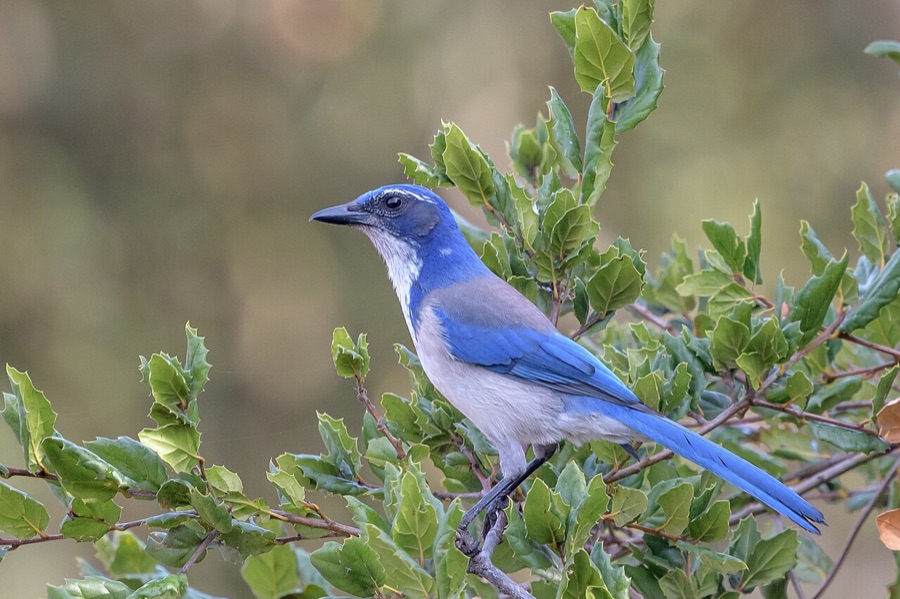
California Scrub-Jay
Aphelocoma californica
A bold, monogamous jay of the Pacific slope. Peanuts are the reliable draw; it will also take sunflower and visit a tray feeder.
- Food to offer
- Peanuts
- Sunflower
- Feeder that suits it
- Platform or large hopper
- Size
- Large
- When to expect it
- Year-round (Pacific coast and foothills)
- Region
- West
Photos of California Scrub-Jay
4 imagesFeeding California Scrub-Jay at a glance
For someone putting out food for the first time.
What to put out
- Peanuts
- Black-oil sunflower
- Suet
Best feeder and placement
Platform or large hopper.
How it behaves at the feeder
A bold, territorial jay that often feeds in pairs and will defend a food source.
How to recognise it
Blue head, wings and tail with a grey-brown back and a white eyebrow.
Often confused with
Western Scrub-Jay group — Scrub-jays are blue with grey-brown backs and no crest; Blue Jay has a crest and white face.
One thing to watch
A Pacific-slope bird. Pairs stay together and may visit the same feeder for years.
A pair, not a flock
Unlike many feeder birds, scrub-jays are usually seen in twos. Pairs stay together through the year and defend a territory, which is why the same two birds may visit your feeder for years.
That has a practical consequence: if you have them, you probably have exactly two. A flock of scrub-jays at a feeder would be unusual.
The oak connection
Scrub-jays cache acorns, and their distribution follows oak woodland closely. In autumn they carry acorns away and bury them, and some of those stores are never recovered — which is how oaks spread.
At a feeder, this translates into a strong preference for peanuts and sunflower, both of which fit the caching habit. Peanuts in the shell are particularly effective.
Feeding notes
| Element | Detail |
|---|---|
| Best food | Peanuts in the shell, black-oil sunflower |
| Feeder | Platform or large hopper |
| Behaviour | Caches food, often in pairs, territorial |
| When | Year-round in oak woodland and suburbs |
Common questions
Why do I only ever see two?
They live in pairs and hold a territory. A pair, not a flock, is the normal pattern.
Do they need oak trees?
Oak woodland is their core habitat and their acorn supply matters. A garden near oaks is far more likely to hold them.
Are they aggressive at the feeder?
Bold and territorial, yes. They will displace smaller birds while present, but usually in short visits.