Jays & crows
Canada Jay
Perisoreus canadensis
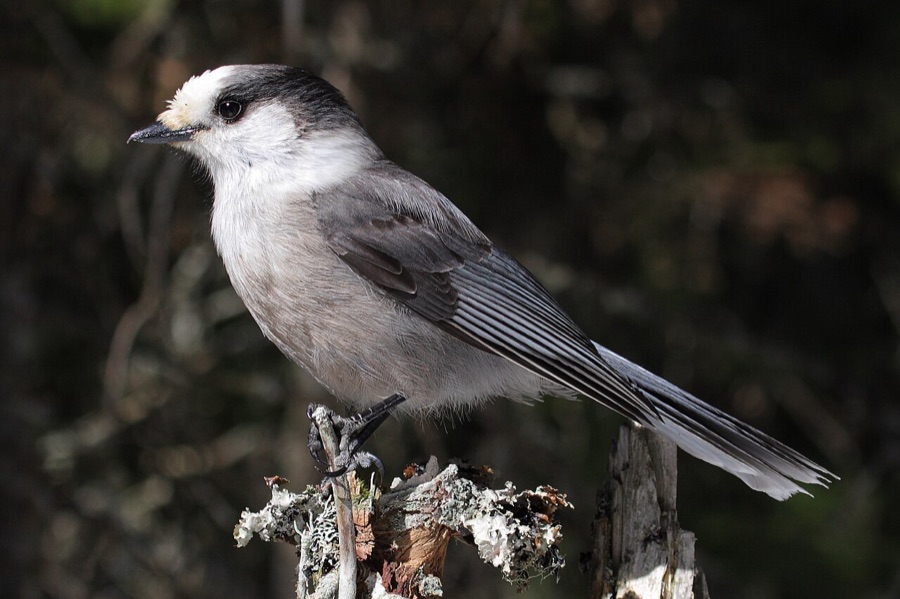
A tame boreal jay, also called the gray jay, that will take food from a platform. It caches food through the year and is a signature bird of northern forests.
- Food to offer
- Peanuts
- Suet
- Feeder that suits it
- Platform or suet cage
- Size
- Medium
- When to expect it
- Year-round (boreal forest)
- Region
- North
Photos of Canada Jay
4 imagesFeeding Canada Jay at a glance
For someone putting out food for the first time.
What to put out
- Peanuts
- Suet
- Black-oil sunflower
Best feeder and placement
Platform or suet cage.
How it behaves at the feeder
Tame and curious, often hovering near people. Caches food through the year.
How to recognise it
Grey overall with a white face, a darker nape and a short bill. No crest.
Often confused with
Blue Jay — Canada Jay is grey and white with no blue; Blue Jay is blue with a crest.
One thing to watch
A boreal bird. It is a treat of northern forests rather than a suburban regular.
A bird that nests in late winter
Most songbirds nest in spring. Canada Jays start far earlier, while snow is still on the ground, and rely on cached food to feed the young. That is only possible because of the caching behaviour described below.
It is a boreal bird. If you live south of the boreal forest, you are unlikely to see one at all, regardless of what you put out.
Caching with sticky saliva
Canada Jays gather food and press it into bark crevices and under lichen, using sticky saliva to glue it in place. Over a year a single bird may make thousands of caches, and it remembers where they are.
At a feeder, this means the bird will take food away rather than eat it on site. Peanuts and suet are both taken readily. A platform or a suet cage suits it better than a small tube.
Common questions
Is it the same as a gray jay?
Yes — Canada Jay and gray jay refer to the same bird. The name has changed more than once.
Why is it so tame?
It is a boreal specialist that has learned to associate people with food. That tameness is exactly why hand-feeding is a bad idea.
Will it come to a seed feeder?
It is more interested in peanuts and suet than small seed. A platform or suet cage is the better offer.