Chickadees & titmice
Carolina Chickadee
Poecile carolinensis
The southern counterpart of the black-capped chickadee, with a similar repertoire at the feeder. Where their ranges meet, the two can be very hard to tell apart by sight.
- Food to offer
- Sunflower
- Peanuts
- Suet
- Feeder that suits it
- Small tube or suet cage
- Size
- Small
- When to expect it
- Year-round (southeastern North America)
- Region
- Southeast
Photos of Carolina Chickadee
2 imagesFeeding Carolina Chickadee at a glance
For someone putting out food for the first time.
What to put out
- Black-oil sunflower
- Peanuts
- Suet
Best feeder and placement
Small tube or suet cage, same setup as for Black-capped.
How it behaves at the feeder
Same take-a-seed-and-leave routine as other chickadees. Often moves in small flocks with titmice and nuthatches.
How to recognise it
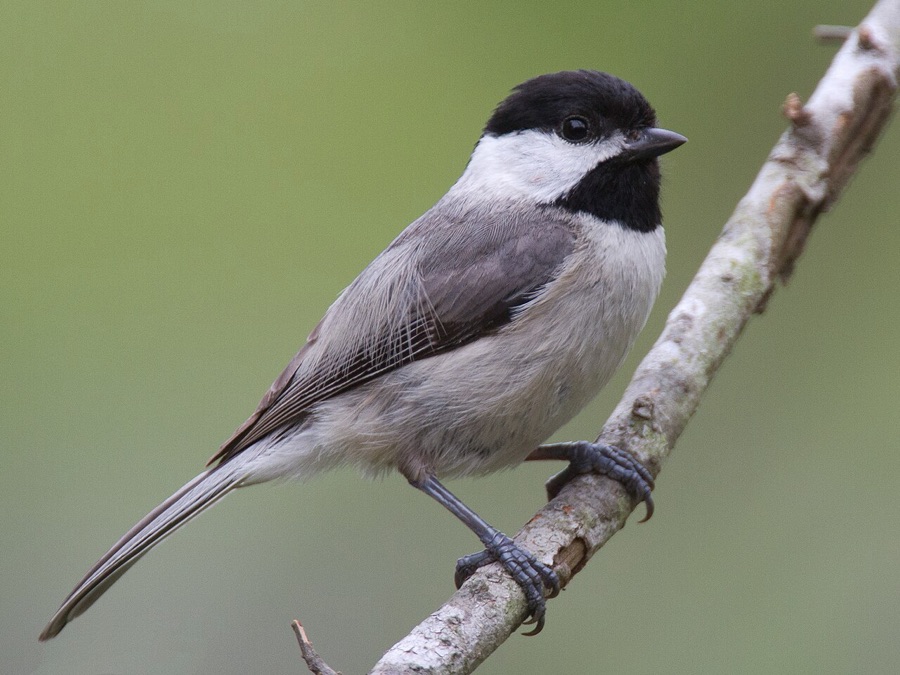
Black cap and bib, white cheeks, grey back. Very close to Black-capped but smaller, with less white in the wing and a slightly higher, faster call.
Often confused with
Black-capped Chickadee — Where ranges meet, song can be learned wrongly by either species. Range is the most reliable clue.
One thing to watch
In the overlap zone, do not rely on a single call to identify it.
The overlap problem
In the band where Black-capped and Carolina Chickadees meet, identification gets genuinely hard. Audubon notes that in the overlap zone the song may not be helpful, because each species can learn the wrong song.
That leaves range and small plumage differences. Carolina is slightly smaller, with less white in the wing and a slightly higher, faster call. In practice, most people identify them by where they are rather than by what they look like.
Feeding behaviour
At a feeder, Carolina Chickadees behave like other chickadees: take a seed, fly to a branch, hammer it open, cache the rest. They often move in small mixed flocks with titmice and nuthatches.
Sunflower, peanuts and suet all work. A small tube with short perches, or a suet cage, is the standard setup.
Common questions
How do I tell it from a Black-capped Chickadee?
Range is the most reliable clue. Where they overlap, look for the slightly smaller size and less white in the wing, and do not rely on song alone.
Do they migrate?
No, they are resident across their range. The same birds are likely to be present year-round.
What is the best food?
Black-oil sunflower, peanuts and suet. Same as other chickadees.