Blackbirds & starlings
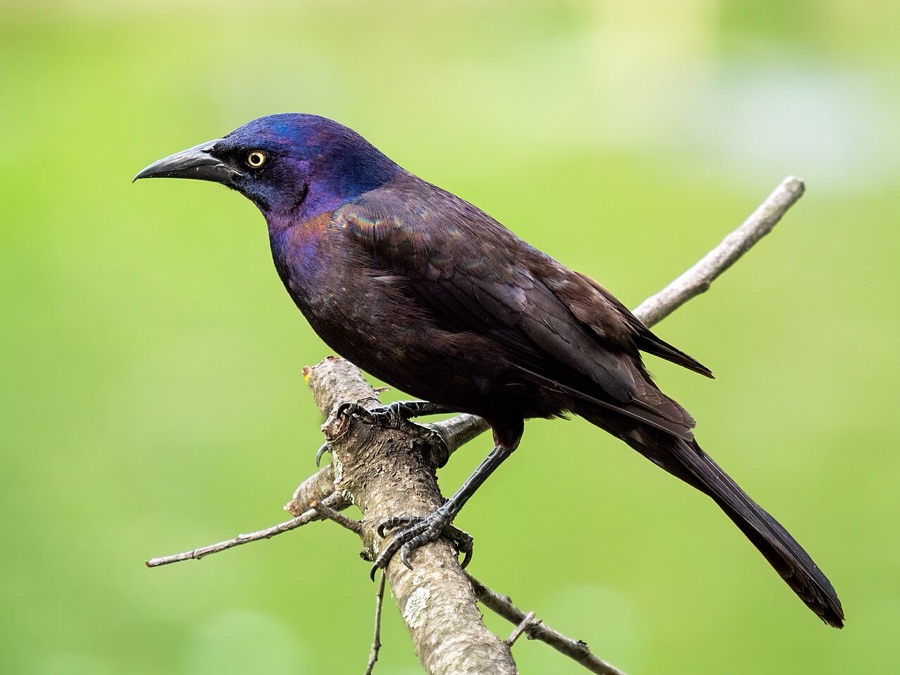
Common Grackle
Quiscalus quiscula
A large, glossy blackbird that arrives in flocks and can clear a platform in minutes. Avoid open trays if grackles are a problem.
- Food to offer
- Millet & corn
- Sunflower
- Feeder that suits it
- Platform or ground
- Size
- Large
- When to expect it
- Year-round in the south; migratory in the north
- Region
- East and centre
Photos of Common Grackle
4 imagesFeeding Common Grackle at a glance
For someone putting out food for the first time.
What to put out
- Millet
- Cracked corn
- Black-oil sunflower
Best feeder and placement
Platform or ground.
How it behaves at the feeder
Arrives in flocks and can clear an open platform in minutes.
How to recognise it
Long-tailed and glossy black with a pale yellow eye and iridescent blue-purple gloss on the head.
Often confused with
European Starling — Starling is compact with a yellow bill and speckles; grackle is longer-tailed with a pale eye.
One thing to watch
Avoid open trays if grackles are a problem. They are a strong argument for small-port feeders.
The flock problem
Grackles are large, glossy, long-tailed blackbirds with a pale eye. They feed in groups, and a group on a platform feeder can clear it in minutes.
They are not a malfunction — they are simply the largest bird your feeder was designed to exclude and failed to.
Hardware, not hostility
FeederWatch's advice for discouraging larger birds applies directly: small tube feeders with short perches, no catch basins, avoid platform trays, and do not spread food on the ground.
If you want grackles, give them their own platform away from the main setup. If you do not, the same advice works in reverse.
Common questions
Why do grackles arrive in flocks?
They are social and feed communally, especially outside the breeding season. A flock can empty a tray quickly.
How do I stop them?
Use small-port feeders with short perches and avoid open trays and ground scatter.
Are they native?
Yes. They are a native North American blackbird, not an introduced species.