Blackbirds & starlings
Red-winged Blackbird
Agelaius phoeniceus
A marsh bird that visits feeders in winter flocks. It feeds on the ground and on open platforms, taking millet and cracked corn.
- Food to offer
- Millet & corn
- Mixed seed
- Feeder that suits it
- Ground or platform
- Size
- Medium
- When to expect it
- Year-round in many areas; northern birds migrate
- Region
- Widespread
Photos of Red-winged Blackbird
4 imagesFeeding Red-winged Blackbird at a glance
For someone putting out food for the first time.
What to put out
- Millet
- Cracked corn
- Mixed seed
Best feeder and placement
Ground or platform.
How it behaves at the feeder
Feeds in flocks on the ground and on open platforms, especially in winter.
How to recognise it
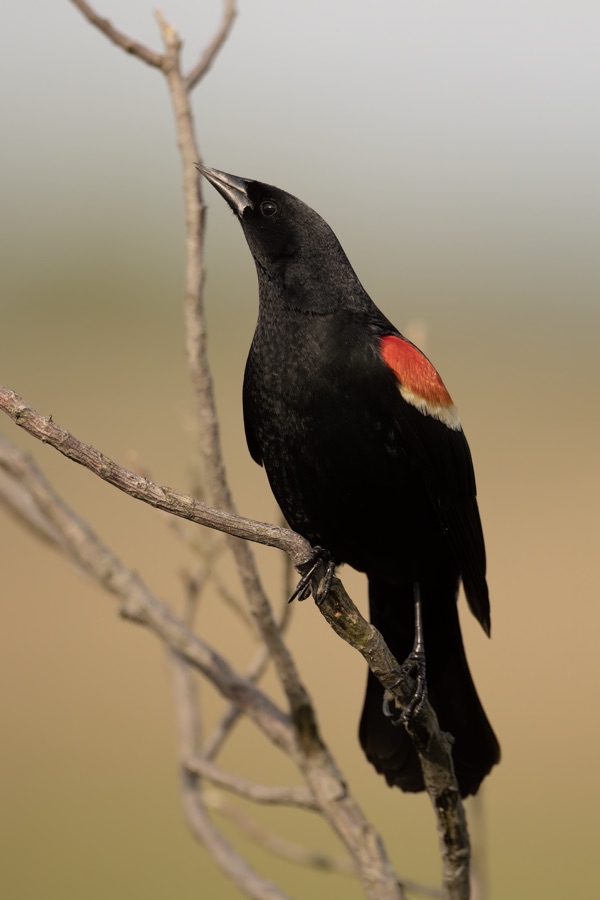
Male black with bright red-and-yellow shoulder patches. Female brown and heavily streaked, resembling a large sparrow.
Often confused with
Common Grackle — Male Red-winged has red shoulder patches; female is streaky brown, unlike the glossy grackle.
One thing to watch
A marsh bird that visits feeders in winter flocks. Ground feeding suits it best.
Two birds, one species
Males are unmistakable: glossy black with bright red and yellow epaulets, often displayed while singing from a reed or a fence post.
Females are heavily streaked brown with a long, pointed bill and a pale eyebrow. They are regularly reported as an unknown sparrow.
A marsh bird at a winter feeder
They breed in marshes and wet fields, but in winter they form large mixed flocks that move across open country and visit feeders.
Millet and cracked corn on the ground or a platform are the standard offerings. They are ground feeders in this context, not tube feeders.
Male or female?
Male
- Black overall
- Red and yellow shoulder patches
- Conspicuous song posts
Female
- Heavily streaked brown
- Long pointed bill
- Pale eyebrow
- Looks like a large sparrow
Common questions
Why is the female so different?
Sexual dimorphism. The female is camouflaged for nesting in reeds; the male is conspicuous for display.
What do they eat at feeders?
Millet and cracked corn, taken on the ground or from a platform.
Do they migrate?
Northern populations migrate; southern birds may be resident. Winter flocks are common in many areas.