Blackbirds & starlings
European Starling
Sturnus vulgaris
An introduced species that can overwhelm a feeder. Suet cages accessible only from below and small-port feeders are the usual ways to limit it.
- Food to offer
- Suet
- Mixed seed
- Feeder that suits it
- Any; often dominates
- Size
- Medium
- When to expect it
- Year-round (widespread)
- Region
- Widespread
Photos of European Starling
4 imagesFeeding European Starling at a glance
For someone putting out food for the first time.
What to put out
- Suet
- Mixed seed
Best feeder and placement
Any — it often dominates.
How it behaves at the feeder
Aggressive and communal. A flock can strip a suet cage or tray quickly and exclude other birds.
How to recognise it
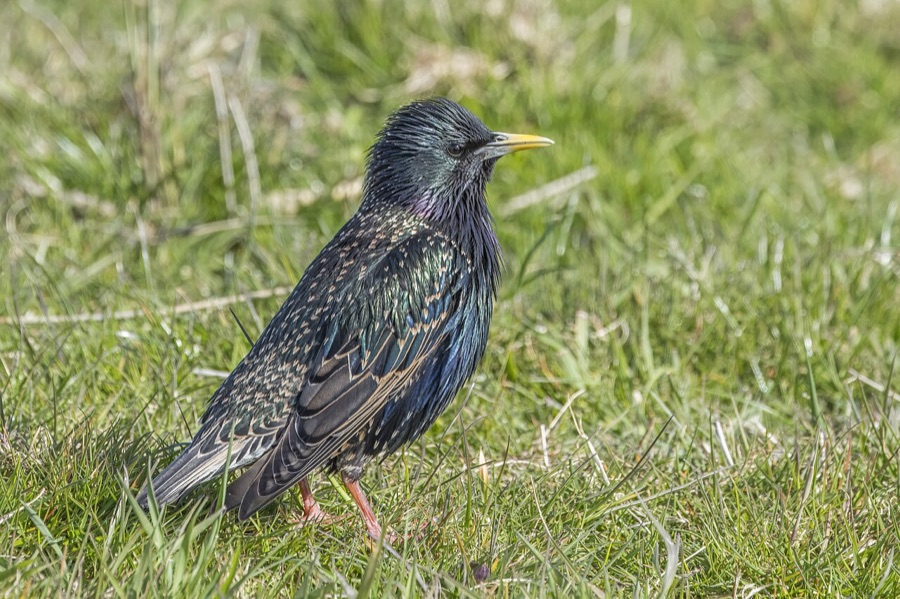
Stocky and dark with a short tail, yellow bill in spring and pale speckling in winter. Walks rather than hops.
Often confused with
Common Grackle — Grackle is longer-tailed with a pale eye and iridescent gloss; starling is compact with a yellow bill and speckles.
One thing to watch
Suet cages accessible only from below and small-port feeders are the usual ways to limit it.
Why it wins
Starlings are aggressive, communal and adaptable. A flock can strip a suet cage or clear a tray quickly, and they will take over nest cavities that native birds would use.
They are also impressive birds in their own right — iridescent black in summer, speckled in winter, with a yellow bill in the breeding season, and capable mimics.
Limiting starlings without harming others
| Approach | Why it helps |
|---|---|
| Suet cage accessible only from below | Woodpeckers and nuthatches cling; starlings struggle |
| Small ports and short perches | Exclude larger birds from tube feeders |
| Avoid open trays and ground scatter | The setups starlings use most easily |
| Weight-sensitive feeders | Close under a heavier bird |
Common questions
Is it native to North America?
No. It was introduced and has spread widely.
How do I keep them off suet?
Use a cage accessible only from below, which suits woodpeckers, nuthatches and chickadees while making access hard for starlings.
Are they bad for other birds?
They compete for nest cavities and can dominate feeders, which is a real pressure on native cavity nesters.