Cardinals & grosbeaks
Evening Grosbeak
Coccothraustes vespertinus
A large, heavy-billed finch that appears irregularly in winter. When it does come, it arrives in flocks and can empty a hopper quickly, so a large feeder and a supply of sunflower help.
- Food to offer
- Sunflower
- Mixed seed
- Feeder that suits it
- Large hopper
- Size
- Medium
- When to expect it
- Irruptive; mostly winter (northern and western North America)
- Region
- North and west
Photos of Evening Grosbeak
4 imagesFeeding Evening Grosbeak at a glance
For someone putting out food for the first time.
What to put out
- Black-oil sunflower
- Peanuts
- Suet, occasionally
Best feeder and placement
Large hopper. It is a big, heavy-billed bird and arrives in flocks.
How it behaves at the feeder
Irruptive. In some winters none appear; in others a flock descends and empties a large feeder quickly. When present, several feed at once and squabble over space.
How to recognise it
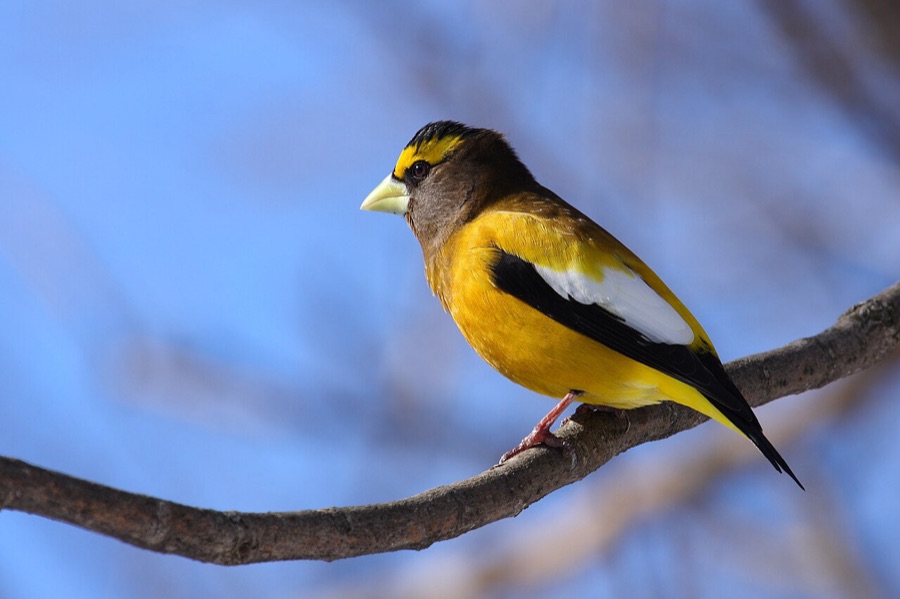
Large and stocky, yellow-brown with a heavy pale bill and a yellow wash over the brow. The bill looks almost too big for the head.
Often confused with
Pine Grosbeak — Pine Grosbeak is redder/greyer with a smaller bill and a longer tail; Evening Grosbeak has the huge pale bill and yellow brow.
One thing to watch
Do not judge your feeder by a year with no grosbeaks. Their movements depend on northern food supplies.
An irruptive visitor
Evening Grosbeaks are irruptive: their movements follow northern food supplies, so some winters bring flocks and others bring none. A feeder that never sees them is not doing anything wrong.
When they do arrive, several feed at once and squabble over space. A large hopper is the practical response, because a small tube will be emptied and contested simultaneously.
The bill is the bird
A large, heavy, pale bill on a stocky yellow-brown bird with a yellow wash over the brow. The bill looks disproportionate to the head, which is exactly the point of a grosbeak.
Males are brighter yellow; females are duller olive-brown. Both share the huge bill.
Evening or Pine Grosbeak?
| Feature | Evening Grosbeak | Pine Grosbeak |
|---|---|---|
| Bill | Very large and pale | Smaller and stubbier |
| Colour | Yellow-brown with yellow brow | Red or grey |
| Tail | Shorter | Longer |
| Pattern | Irruptive flocks | Irregular, often tame |
Common questions
Why do they come only in some years?
They are irruptive and follow northern food supplies. Absence is normal, not a sign your feeder failed.
What should I put out?
Black-oil sunflower, with peanuts taken too. A large hopper suits a flock.
Are they aggressive?
They squabble among themselves and can dominate a feeder while present, but they usually move on.