Cardinals & grosbeaks
Rose-breasted Grosbeak
Pheucticus ludovicianus
A heavy-billed summer visitor that takes sunflower and safflower. It often arrives in spring and again during autumn migration, and will use a tray as readily as a hopper.
- Food to offer
- Sunflower
- Mixed seed
- Feeder that suits it
- Hopper or platform
- Size
- Medium
- When to expect it
- Spring to autumn (eastern and central North America)
- Region
- East and centre
Photos of Rose-breasted Grosbeak
4 imagesFeeding Rose-breasted Grosbeak at a glance
For someone putting out food for the first time.
What to put out
- Black-oil sunflower
- Safflower
- Fruit, occasionally
Best feeder and placement
Hopper or platform. The bird is large enough to need room to land and turn.
How it behaves at the feeder
A heavy, deliberate feeder that can look almost clumsy on a small tube. Often arrives in spring and again on autumn migration, sometimes in loose groups.
How to recognise it
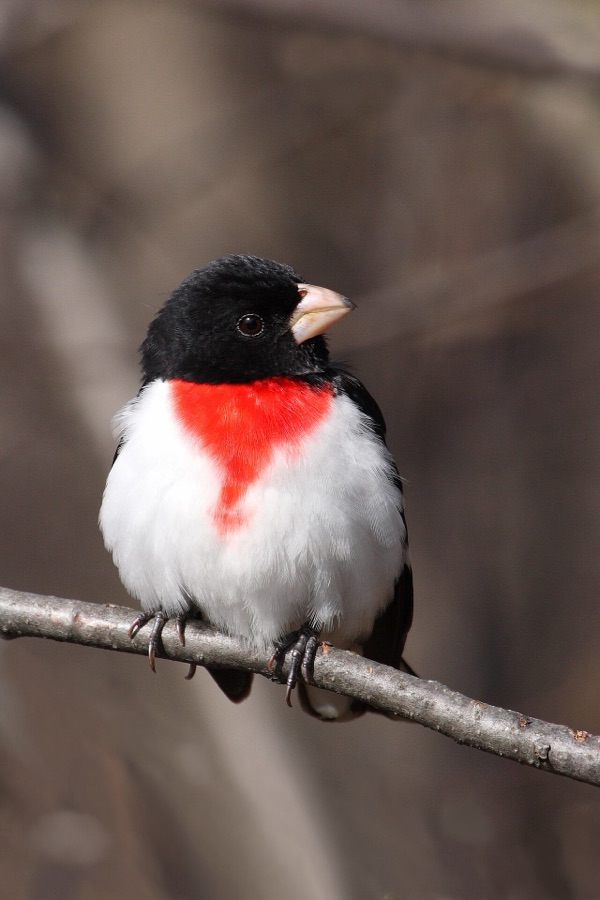
Male black and white with a bright rose-red breast patch and a huge pale bill. Female brown and streaked with a bold white eyebrow and a heavy bill.
Often confused with
Black-headed Grosbeak — West; male orange rather than rose-red. Females are very similar — range is the safest clue.
One thing to watch
It is a summer and migration visitor, not a year-round bird. A feeder that is quiet in winter is not failing.
Two plumages, one bird
The male is black and white with a bright rose-red breast patch and a huge pale bill. The female is brown and heavily streaked with a bold white eyebrow and the same heavy bill.
That bill is the giveaway for the female. It is too large and too pale for a sparrow, and it is the reason she is usually identified as a grosbeak once someone points it out.
A summer and migration visitor
In much of its range this is not a year-round feeder bird. It arrives in spring, breeds, and moves south in autumn, sometimes in loose groups. A feeder that is busy in May and quiet in January is behaving normally.
Sunflower and safflower are the reliable offerings. A hopper or platform gives the bird room to land and turn.
Common questions
Why do I only see them in spring?
They are summer breeders and migrants in much of their range. Spring and autumn are peak times; winter absence is normal.
What do they eat?
Sunflower and safflower are the main feeder foods, with fruit taken occasionally.
Are females common at feeders?
Yes, though they are overlooked because people learn the male first. Look for the heavy bill and white eyebrow.