Cardinals & grosbeaks
Pine Grosbeak
Pinicola enucleator
A boreal species that visits feeders in some winters. Sunflower is the reliable draw; it is a slow, deliberate feeder that is easily displaced by larger birds.
- Food to offer
- Sunflower
- Suet
- Feeder that suits it
- Hopper or platform
- Size
- Medium
- When to expect it
- Winter (northern forests; irruptive)
- Region
- North
Photos of Pine Grosbeak
3 imagesFeeding Pine Grosbeak at a glance
For someone putting out food for the first time.
What to put out
- Black-oil sunflower
- Suet
- Fruit, occasionally
Best feeder and placement
Hopper or platform. A slow, deliberate feeder that needs room.
How it behaves at the feeder
Unhurried and often tame. It tends to feed low and can be displaced by larger or more aggressive birds.
How to recognise it
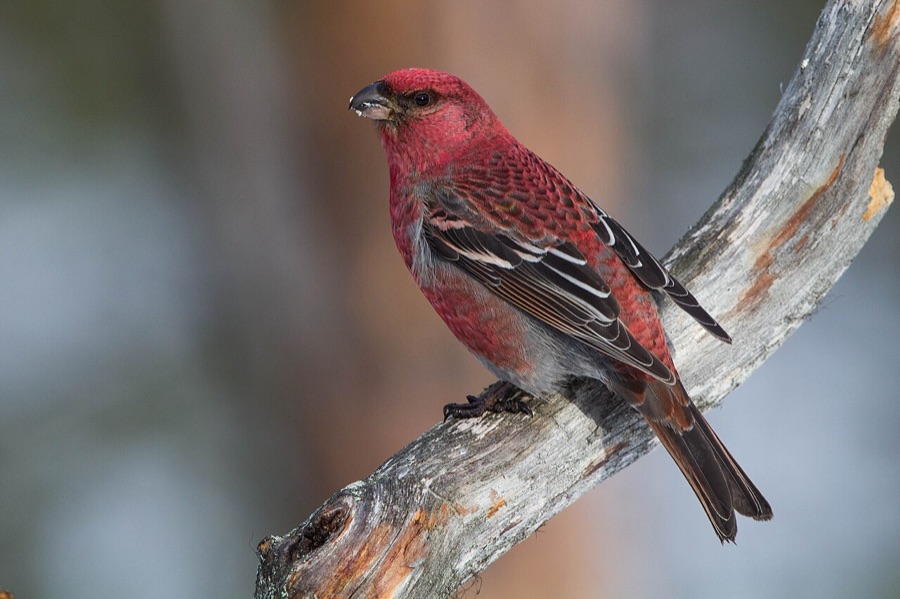
Large and heavy-bodied, with a long tail and a stubby bill. Males are reddish-pink; females and young are grey with rusty head and rump.
Often confused with
Evening Grosbeak — Evening Grosbeak is yellow-brown with a much larger pale bill; Pine Grosbeak is red or grey with a smaller bill.
One thing to watch
A boreal and winter visitor in most of its range. If it appears, it is usually a treat rather than a routine.
Large, slow and tame
Pine Grosbeaks are heavy-bodied with a long tail and a stubby bill. Males are reddish-pink; females and young birds are grey with rusty head and rump.
They feed deliberately rather than snatching, which makes them easy to observe and also easy to displace by larger or more aggressive birds.
A northern and winter bird
In most of the range this is a boreal species, and in settled areas it is usually a winter visitor. It appears irregularly, following northern food supplies like other northern finches.
Sunflower is the reliable offering. Suet is also taken, and a platform or hopper gives the bird room to feed without competing at a small port.
Common questions
Is it rare?
It is uncommon in settled areas and mainly a northern bird. In its boreal range it is regular; in gardens it is a winter treat.
What does it eat?
Sunflower is the main feeder food, with suet and fruit taken occasionally.
Why is it so tame?
Boreal birds that see few people often are. That is also why you should not hand-feed it.