Cardinals & grosbeaks
Northern Cardinal
Cardinalis cardinalis
A big bill makes cardinals specialists at cracking black-oil sunflower. They will also take safflower, but most birds prefer sunflower when both are offered.
- Food to offer
- Sunflower
- Mixed seed
- Feeder that suits it
- Hopper or large tube
- Size
- Medium
- When to expect it
- Year-round (eastern and central North America)
- Region
- East and centre
Photos of Northern Cardinal
4 imagesFeeding Northern Cardinal at a glance
For someone putting out food for the first time.
What to put out
- Black-oil sunflower (the main draw)
- Safflower as an alternative
- Peanuts, taken occasionally
Best feeder and placement
Hopper or large tube with a solid perch. Cardinals are heavy and need a stable landing place.
How it behaves at the feeder
Usually feeds deliberately, cracking a seed at the feeder rather than carrying it away. Pairs often arrive together; the male is usually more conspicuous.
How to recognise it
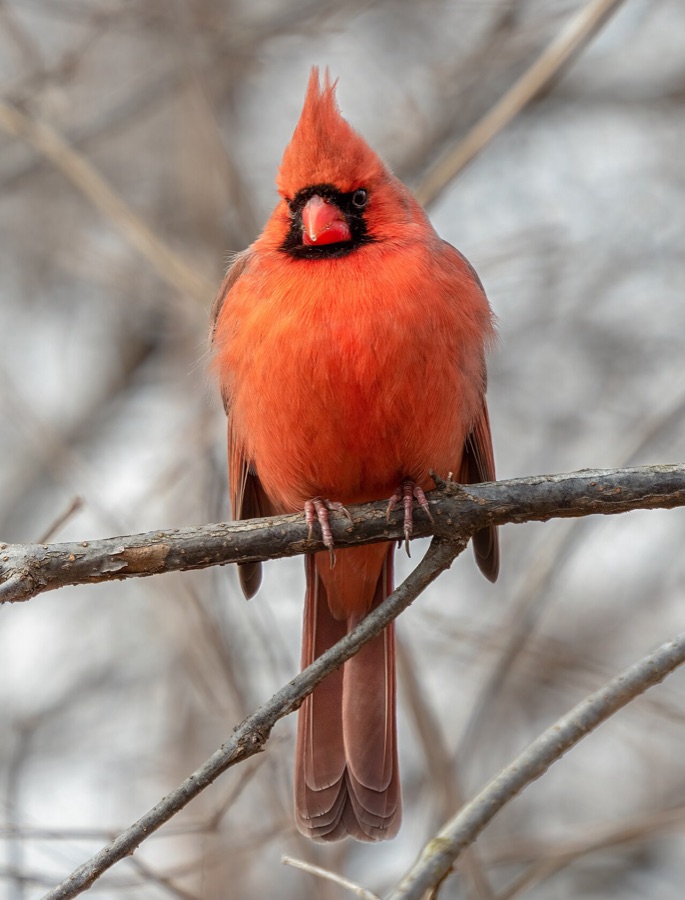
Male all red with a black face mask and a heavy conical bill. Female warm brown with red edges to the wings, tail and crest — often mistaken for a different species.
Often confused with
Pyrrhuloxia — Southwest only; grey body with a red mask and crest, and a yellower bill.
One thing to watch
Cheap mixes with a lot of milo make cardinals sort through food they do not want. A straight sunflower bag is a better buy.
A bill made for sunflower
The cardinal's heavy, conical bill is a seed-cracking tool, and black-oil sunflower is the seed it is best suited to. FeederWatch describes black-oil sunflower as high in energy with thin shells, and lists cardinals among the birds that favour it, alongside chickadees, finches and sparrows.
This matters when you are choosing a bag. A cheap mix with a lot of milo asks the cardinal to sort through food it does not want. A straight bag of sunflower asks it to do nothing but eat.
Cardinal-friendly setup
| Element | What works | Why |
|---|---|---|
| Food | Black-oil sunflower | High energy, thin shell, matched to the bill |
| Alternative | Safflower | Attracts cardinals and other big-billed birds |
| Feeder | Hopper or large tube | The bird needs a perch and room to work a seed |
| Placement | Near cover, about 3 m away | Retreat distance without giving squirrels a launch point |
A year-round bird, not a winter visitor
In most of its range the cardinal is present all year, which is part of why it is such a satisfying feeder bird: the same individual may be at your feeder in January and July.
That also means the cleaning routine does not get a break. A feeder that is busy in every season needs washing in every season — FeederWatch's general guidance is every week or two, and more often during heavy use or wet weather.
Common questions
Do cardinals migrate?
Generally no — they are resident across their range. Some local movement occurs at the edges of the range, but you are not waiting for them to return in spring.
Will cardinals use a hanging feeder?
Yes, particularly a hopper or a large tube with a perch. They are heavier than a chickadee and need something stable to land on.
Why do I only see cardinals at dawn and dusk?
Cardinals are often most active early and late. If your feeder is only watched at midday, you may simply be missing them rather than not attracting them.