Other garden birds
Cedar Waxwing
Bombycilla cedrorum
A nomadic fruit specialist that appears when berries are ripe. Planted fruit-bearing shrubs are more reliable than a feeder; a fruit tray may work.
- Food to offer
- Fruit
- Feeder that suits it
- Fruit tray
- Size
- Medium
- When to expect it
- Nomadic; often autumn and winter
- Region
- Widespread
Photos of Cedar Waxwing
3 imagesFeeding Cedar Waxwing at a glance
For someone putting out food for the first time.
What to put out
- Fruit
- Berries
Best feeder and placement
Fruit tray, but planted fruit is more reliable.
How it behaves at the feeder
Nomadic. Appears when berries ripen and moves on. Rarely uses a seed feeder.
How to recognise it
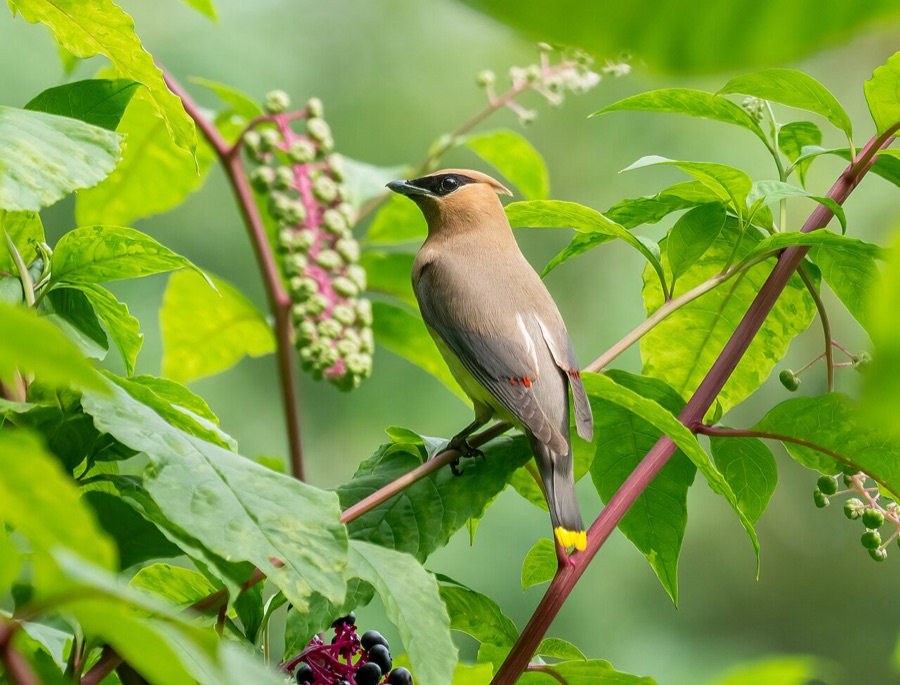
Sleek brown-grey bird with a pointed crest, a black mask and a yellow tip to the tail.
Often confused with
Bohemian Waxwing — Bohemian is larger with a grey belly and colourful wing markings; Cedar has a yellowish belly.
One thing to watch
Planting fruit-bearing shrubs does more than any feeder. A fruit tray may work when they are around.
A nomadic fruit eater
Waxwings are sleek, crested, brown-grey birds with a black mask and a yellow tail tip. They move in flocks, following fruit, and their presence is unpredictable.
Because they are nomadic, planting fruit-bearing shrubs is far more reliable than any feeder. A fruit tray may work when they are already nearby.
What to offer if they are around
Fruit is the only meaningful offer. Grapes, berries and raisins without preservatives can work on a tray.
FeederWatch warns that mouldy fruit can produce toxins harmful to birds, so fruit must be replaced often — which makes a fruit tray a high-maintenance option for a nomadic bird.
Common questions
Will they come to a seed feeder?
No. They are fruit specialists. A fruit tray may occasionally work, but planted fruit is more reliable.
Why do they appear suddenly?
They are nomadic and follow fruit crops. A flock arriving and leaving within days is normal.
What plants help?
Native shrubs and trees that bear fruit are the long-term answer. Check a regional native-plant guide for species suited to your area.