Other garden birds
Eastern Towhee
Pipilo erythrophthalmus
A large, ground-foraging sparrow that scratches in leaf litter. Millet and sunflower on the ground, with brushy cover nearby, suit it best.
- Food to offer
- Millet & corn
- Sunflower
- Feeder that suits it
- Ground or low platform
- Size
- Medium
- When to expect it
- Year-round in the south; northern birds migrate
- Region
- East
Photos of Eastern Towhee
3 imagesFeeding Eastern Towhee at a glance
For someone putting out food for the first time.
What to put out
- Millet
- Black-oil sunflower
- Mixed seed
Best feeder and placement
Ground or low platform.
How it behaves at the feeder
Scratches in leaf litter with both feet. Feeds on the ground, often under cover.
How to recognise it
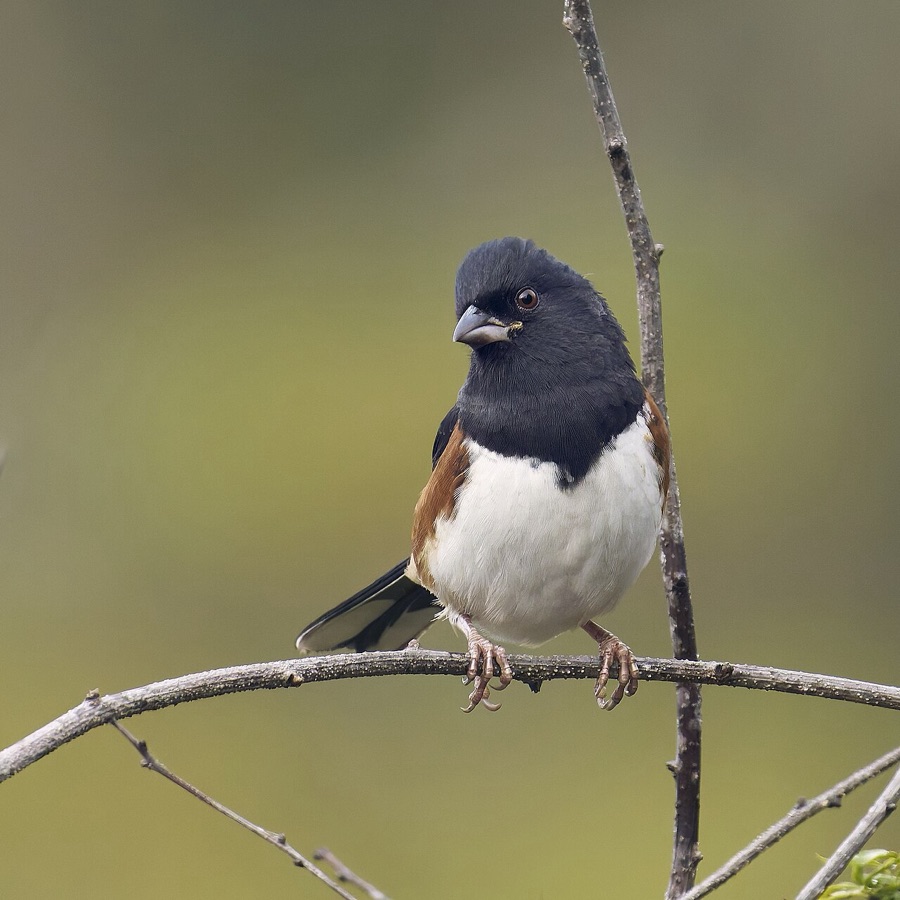
Male black hood, back and throat with rufous sides and a white belly. Female is brown where the male is black. Red eye.
Often confused with
Spotted Towhee — Spotted has white spots on the back and wings; Eastern is plainer. Range separates them.
One thing to watch
Leaf litter and brushy edges are the habitat. A raked-clean garden will not hold one.
The double scratch
Towhees forage by hopping forward, then jumping back and kicking both feet to expose food under leaves. It is a distinctive movement once you know it.
That behaviour explains the habitat requirement: leaf litter, brushy edges and low cover. An open lawn with a hanging feeder is not towhee habitat.
Feeding
Millet and sunflower on the ground are the standard offerings. A low platform or simply scattered seed under cover works better than an elevated feeder.
Males are black-hooded with rufous sides and a white belly; females replace the black with brown. Both have a red eye.
Common questions
Why is it scratching backwards?
It is exposing food under leaf litter with a two-footed kick. It is normal foraging, not a sign of illness.
Will it use a hanging feeder?
Rarely. It is a ground feeder; use a low tray or scatter seed.
How do I attract one?
Leaf litter, low shrubs and brushy edges, plus seed on the ground. Habitat matters more than hardware.