Other garden birds
Gray Catbird
Dumetella carolinensis
A secretive relative of the mockingbird that skulks in low cover. Fruit, suet and mealworms on a low tray bring it out.
- Food to offer
- Fruit
- Suet
- Mealworms
- Feeder that suits it
- Low tray or suet cage
- Size
- Medium
- When to expect it
- Spring to autumn (eastern and central North America)
- Region
- East and centre
Photos of Gray Catbird
4 imagesFeeding Gray Catbird at a glance
For someone putting out food for the first time.
What to put out
- Fruit
- Suet
- Mealworms
Best feeder and placement
Low tray or suet cage.
How it behaves at the feeder
Secretive and low, often in dense cover. Comes to fruit, suet and mealworms on a low tray.
How to recognise it
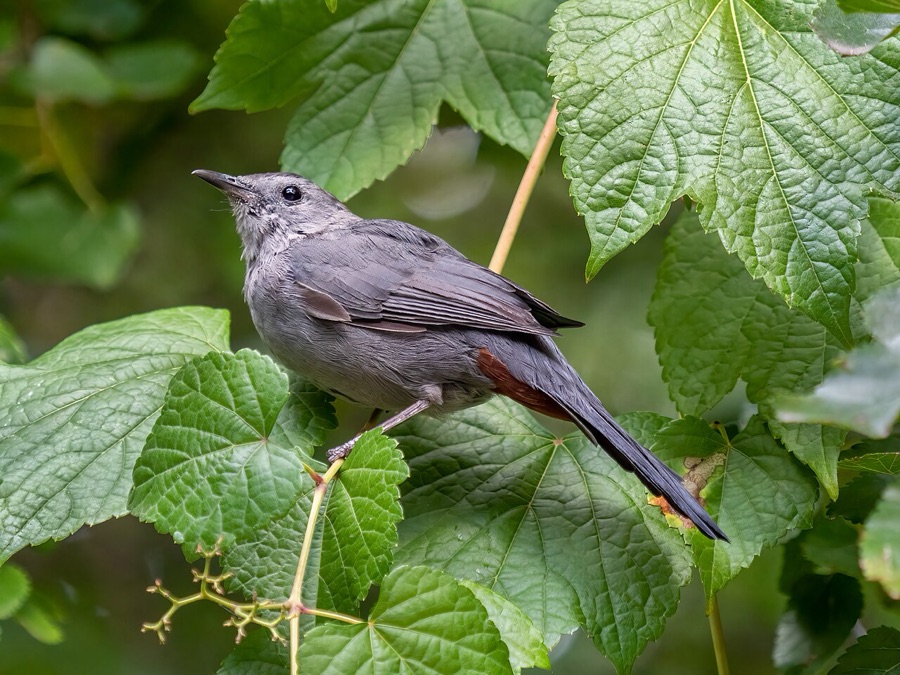
Slate grey with a black cap and a rusty-red undertail. Often heard more than seen.
Often confused with
Northern Mockingbird — Mockingbird is paler with white wing patches; Catbird is darker with a black cap and rusty undertail.
One thing to watch
It needs low cover. An open lawn with a hanging feeder will not hold one.
A skulker, not a feeder regular
Catbirds are slate grey with a black cap and a rusty-red undertail. They spend most of their time low in dense shrubs and are easily missed until they call.
That habitat preference is the key to attracting them: cover matters more than the feeder. A low tray near a shrub is far more likely to be used than a hanging tube.
What to offer
Fruit, suet and mealworms are the reliable offers. They are not seed eaters in any meaningful sense.
Because they feed low, a tray or a suet cage at shrub height works better than anything mounted high.
Common questions
Why do I hear one but never see it?
They skulk in low cover and are heard far more often than seen. A low tray near shrubs improves your chances.
What do they eat?
Fruit, berries, insects, suet and mealworms. Not seed.
Do they migrate?
Yes, they are summer breeders across much of North America and move south for winter.