Other garden birds
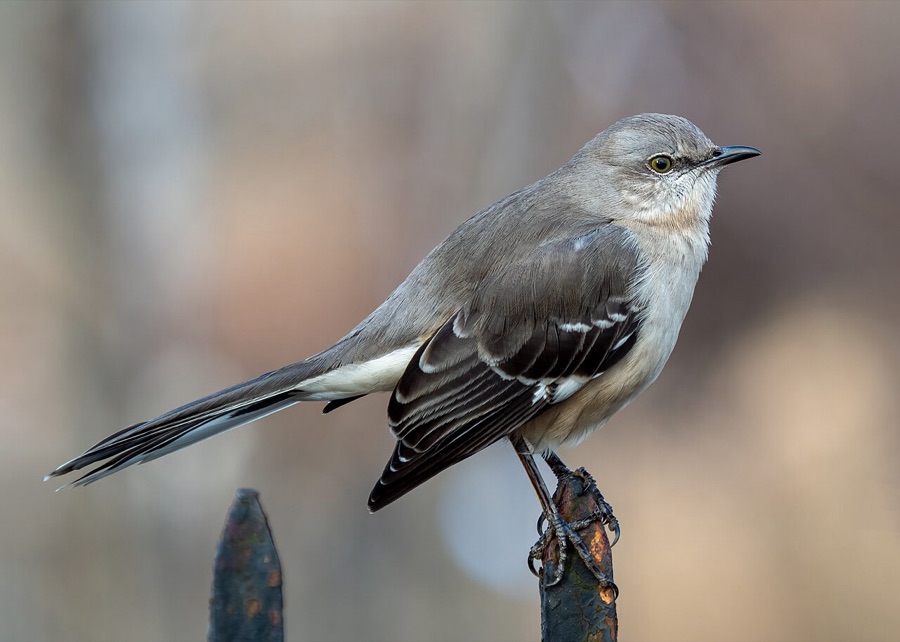
Northern Mockingbird
Mimus polyglottos
A territorial songster that is not primarily a seed eater. Fruit and suet are the reliable offerings; it often defends a food source against all comers.
- Food to offer
- Fruit
- Suet
- Feeder that suits it
- Platform, suet cage or fruit tray
- Size
- Medium
- When to expect it
- Year-round (southern and central North America)
- Region
- South and centre
Photos of Northern Mockingbird
4 imagesFeeding Northern Mockingbird at a glance
For someone putting out food for the first time.
What to put out
- Fruit
- Suet
- Berries
Best feeder and placement
Platform, suet cage or fruit tray.
How it behaves at the feeder
Territorial and bold. Not primarily a seed eater; it defends fruit and suet aggressively.
How to recognise it
Grey above and pale below with a long tail, white wing patches and a thin bill.
Often confused with
Gray Catbird — Catbird is darker slate-grey with a black cap and rusty undertail; Mockingbird is paler with white wing patches.
One thing to watch
Fruit and suet are the offers that work. Seed feeders are usually ignored.
Fruit and suet, not sunflower
Mockingbirds eat insects, fruit and berries. At a feeder, fruit and suet are the offers that work; a seed feeder is usually ignored.
They are strongly territorial and will defend a fruit source or a suet cage against other birds, sometimes against much larger ones.
The night singer
Unmated males in particular sing at night, often from a high perch or a streetlight, and they mimic other species and even mechanical sounds.
It is normal behaviour, not a sign of distress. It is also a reason people sometimes ask how to stop it — there is no humane way beyond patience or light management.
Common questions
Will they eat seed?
Rarely. They are fruit and insect eaters. Fruit and suet are the feeder offers that work.
Why does it sing at night?
Unmated males often sing at night, especially in spring and early summer. It is normal courtship behaviour.
Why is it chasing other birds?
Territoriality. Mockingbirds defend food sources and nesting areas aggressively.