Sparrows & juncos
Chipping Sparrow
Spizella passerina
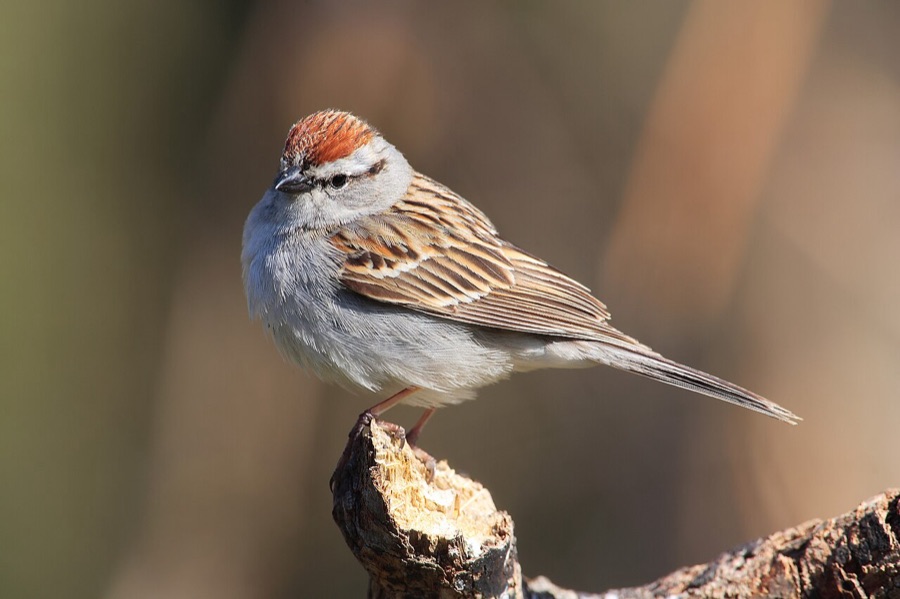
A small, neat sparrow with a rufous cap in breeding plumage. It feeds mainly on the ground and takes millet and small seeds.
- Food to offer
- Millet & corn
- Sunflower
- Feeder that suits it
- Ground or low platform
- Size
- Small
- When to expect it
- Spring to autumn in the north; year-round in the south
- Region
- Widespread
Photos of Chipping Sparrow
2 imagesFeeding Chipping Sparrow at a glance
For someone putting out food for the first time.
What to put out
- Millet
- Black-oil sunflower
- Mixed seed
Best feeder and placement
Ground or low platform.
How it behaves at the feeder
A small, neat sparrow that feeds mainly on the ground, often under or near feeders.
How to recognise it
Breeding adults have a rufous cap, white eyebrow and a black line through the eye. Winter birds are duller and streaked.
Often confused with
American Tree Sparrow — Tree Sparrow has a bicoloured bill and a central breast spot; Chipping has a rufous cap and black eyeline.
One thing to watch
A summer bird in the north. Its plain winter plumage makes it easy to overlook.
Summer and winter plumages
Breeding adults have a rufous cap, a white eyebrow and a black line through the eye. The breast is plain grey, without streaking.
In winter the cap is duller and the bird is streakier, making it much less distinctive. Many winter chipping sparrows are never identified.
A ground feeder in summer
Chipping Sparrows feed mainly on the ground, often under or near feeders. Millet and small seeds suit them.
They are summer breeders across much of the north and year-round in the south, so a feeder that has them in July may not in January.
Chipping vs American Tree Sparrow
Chipping Sparrow
- Rufous cap
- Black eyeline
- Plain grey breast
- Summer in the north
American Tree Sparrow
- Rufous cap
- Bicoloured bill
- Dark central breast spot
- Winter in the north
Common questions
Why do they look different in winter?
The breeding plumage is brighter, with a clear rufous cap. Winter birds are duller and streakier.
What should I put out?
Millet and small seeds on the ground or a low tray.
How do I tell it from a Tree Sparrow?
Tree Sparrow has a bicoloured bill and a breast spot; Chipping has a black eyeline and a plain breast.