Sparrows & juncos
Song Sparrow
Melospiza melodia
A streaky sparrow that often feeds on the ground beneath a feeder rather than on it. Brush piles nearby make a garden much more attractive to it.
- Food to offer
- Millet & corn
- Mixed seed
- Feeder that suits it
- Ground or low platform
- Size
- Small
- When to expect it
- Year-round in many areas
- Region
- Widespread
Photos of Song Sparrow
4 imagesFeeding Song Sparrow at a glance
For someone putting out food for the first time.
What to put out
- Millet
- Mixed seed
- Black-oil sunflower
Best feeder and placement
Ground or low platform.
How it behaves at the feeder
Often feeds beneath the feeder rather than on it. Brushy cover nearby is the real attractant.
How to recognise it
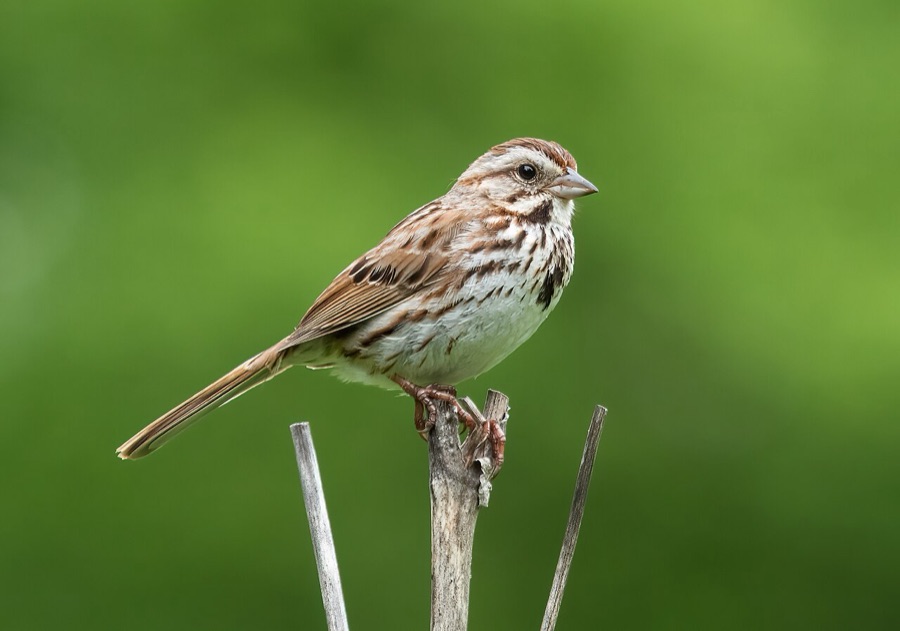
Heavily streaked brown sparrow with a central dark breast spot and a rounded tail.
Often confused with
Fox Sparrow — Fox Sparrow is larger and redder with heavy chevron streaking; Song Sparrow is browner with a breast spot.
One thing to watch
If you want Song Sparrows, leave some untidy cover. A bare lawn and a feeder will not do it.
The breast spot
Heavily streaked brown above and below, with a dark central spot on the breast and a rounded tail. The breast spot is the quickest mark.
It is variable across its range, which is part of why it has so many recognised forms, but the streaking and the spot are consistent.
Habitat, not hardware
Song Sparrows feed on the ground and in low cover. They often feed beneath a feeder rather than on it, and they need shrubby edges and some litter.
Millet and mixed seed scattered on the ground are the offers that work. A tidy lawn with no cover will not hold them.
Common questions
Why does it feed under the feeder?
It is a ground forager. Fallen seed and cover at ground level are what it uses.
How do I attract one?
Ground seed plus shrubby cover or a brush pile. Habitat matters more than feeder type.
Do they migrate?
Some populations are resident, others migrate. In many areas they are present year-round.