Sparrows & juncos
White-throated Sparrow
Zonotrichia albicollis
A handsome winter sparrow with a white throat and a thin, high song. It feeds on the ground and in low cover, taking millet and sunflower.
- Food to offer
- Millet & corn
- Sunflower
- Feeder that suits it
- Ground or low platform
- Size
- Small
- When to expect it
- Autumn to spring (winter in the east)
- Region
- East
Photos of White-throated Sparrow
4 imagesFeeding White-throated Sparrow at a glance
For someone putting out food for the first time.
What to put out
- Millet
- Black-oil sunflower
- Mixed seed
Best feeder and placement
Ground or low platform.
How it behaves at the feeder
A winter sparrow that feeds on the ground in low cover and often scratches in leaf litter.
How to recognise it
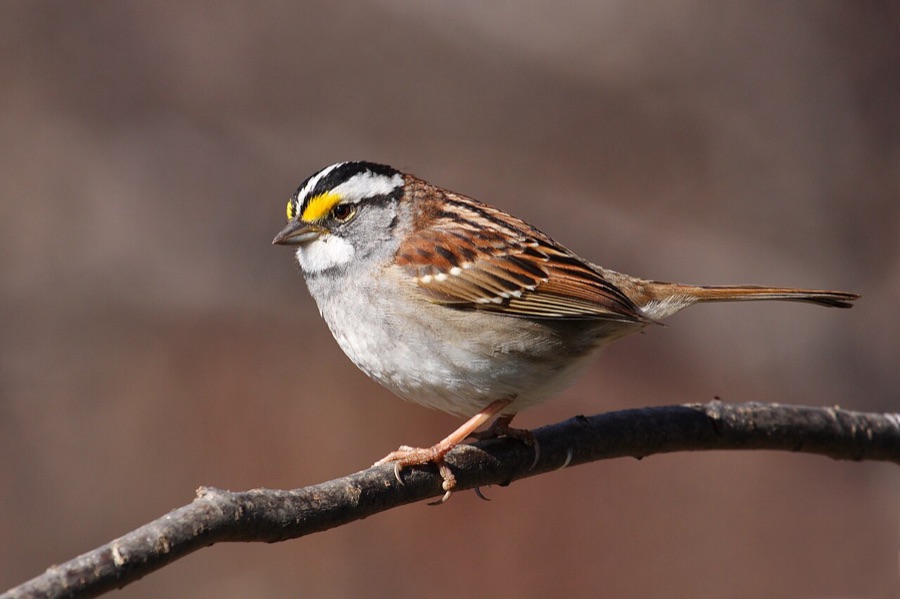
Brown streaked back, grey breast, a white throat patch and yellow lores between the eye and bill.
Often confused with
White-crowned Sparrow — White-crowned has bold black-and-white head stripes and no white throat patch.
One thing to watch
A brush pile nearby makes a garden far more attractive than an exposed feeder.
Two marks
A white throat patch and yellow between the eye and the bill. The head is boldly striped, and the bird is brown and streaked above with a grey breast.
There is also a tan-striped form with duller head stripes, which confuses people who learn the bright form first. Both have the white throat.
A winter ground feeder
In much of the east this is a winter bird, arriving in autumn and leaving in spring. It feeds on the ground and in low cover, often in loose flocks.
Millet and sunflower scattered on the ground or on a low tray suit it. A brush pile nearby increases the chance it stays.
Common questions
Why is it only here in winter?
It breeds further north and winters across much of the eastern United States. Autumn arrival and spring departure are normal.
What should I put out?
Millet and sunflower on the ground or a low tray.
Why do some look duller?
There are two colour forms, white-striped and tan-striped. Both have the white throat.