Sparrows & juncos
House Sparrow
Passer domesticus
An introduced, aggressive sparrow that can dominate a feeder. It takes most seeds; if it is overwhelming other birds, smaller ports and fewer ground offerings help.
- Food to offer
- Millet & corn
- Mixed seed
- Feeder that suits it
- Ground, platform or large tube
- Size
- Small
- When to expect it
- Year-round (widespread)
- Region
- Widespread
Photos of House Sparrow
4 imagesFeeding House Sparrow at a glance
For someone putting out food for the first time.
What to put out
- Millet
- Mixed seed
- Cracked corn
Best feeder and placement
Ground, platform or large tube.
How it behaves at the feeder
Aggressive and social. Can dominate a feeder and exclude smaller birds.
How to recognise it
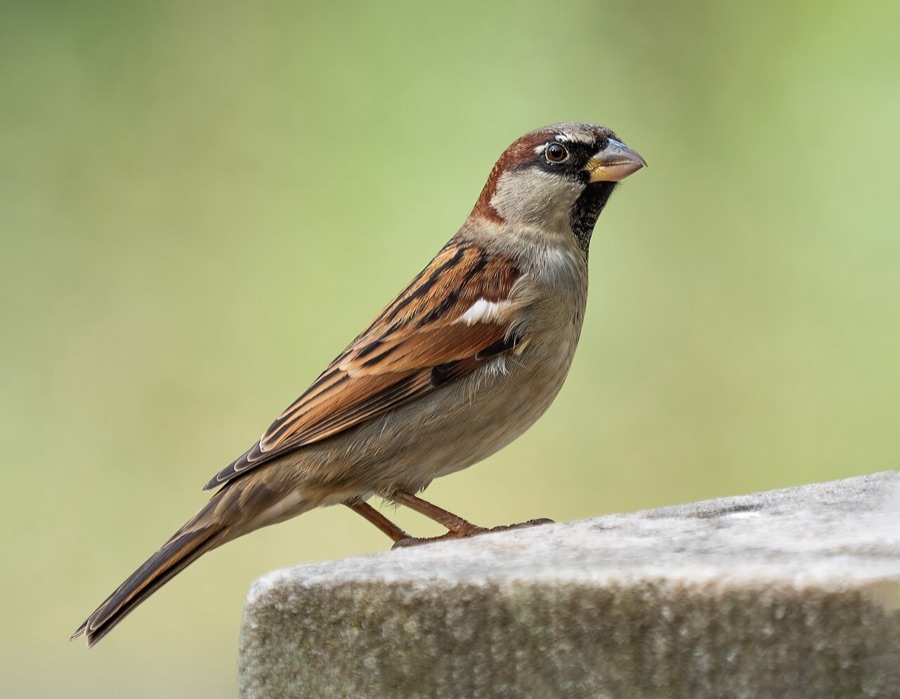
Male has a grey crown, chestnut nape, black bib and streaked brown back. Female is plain brown with a pale eyebrow.
Often confused with
Chipping Sparrow — Chipping has a rufous cap; female House Sparrow is plain brown, larger and stockier.
One thing to watch
If House Sparrows take over, smaller ports and fewer ground offerings help. They also compete for nest boxes.
The bully of the feeder
House Sparrows are social, aggressive and adaptable. They can dominate a feeder and exclude smaller birds, and they compete seriously for nest cavities.
Males have a grey crown, chestnut nape and black bib; females are plain brown with a pale eyebrow. Both are stocky with heavy bills.
What to do about them
The usual approach is feeder design rather than confrontation: small ports, short perches, and fewer ground offerings. House Sparrows are larger than native finches and chickadees and are excluded by tight hardware.
For nest boxes, the standard advice is to avoid box sizes and locations that suit them, and to monitor boxes so they do not take over a native bird's nest.
Common questions
Are House Sparrows native?
No. They were introduced and are now widespread.
How do I keep them off the feeder?
Use small ports and short perches, and reduce ground feeding. They are larger and heavier than native finches and chickadees.
Do they take over nest boxes?
Yes. They compete aggressively for cavities, which is why box monitoring matters for bluebirds and other native cavity nesters.