02 · February
Watch for damp seed
Freeze-thaw cycles are the enemy of stored seed. Clumped or damp seed spoils quickly and is not worth topping up over.
- Suet
- Sunflower
- Nyjer
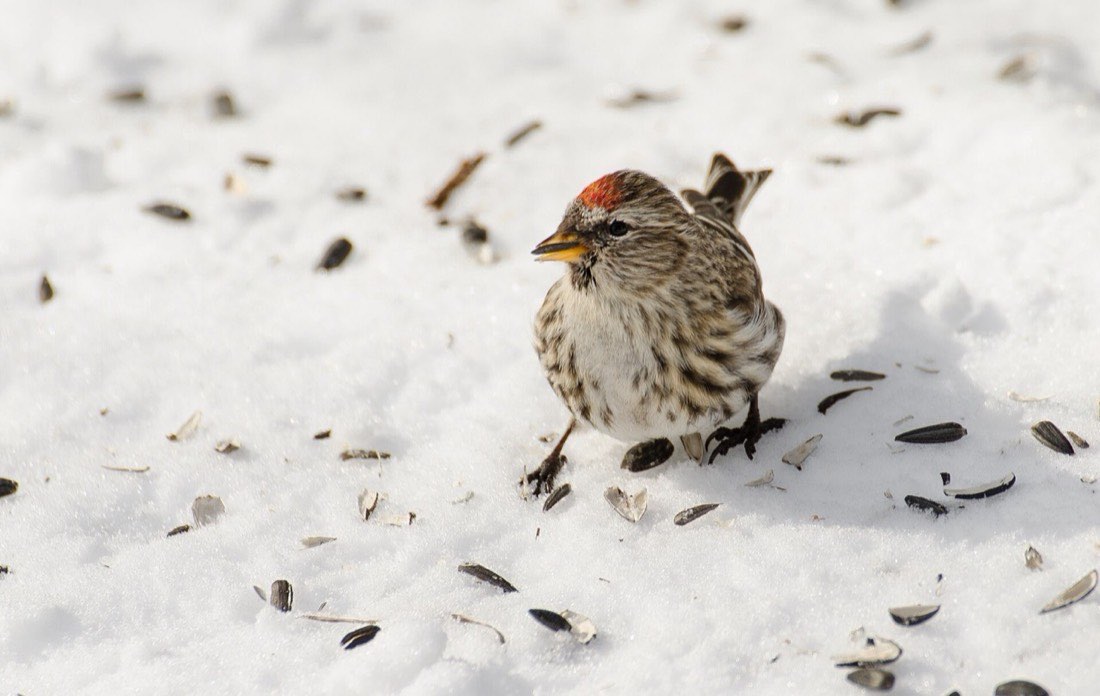
At a glance
- Put out
- Suet, Sunflower, Nyjer
- Birds to expect
- Black-capped Chickadee, Dark-eyed Junco, Northern Cardinal, Downy Woodpecker, and 3 more
- Main job
- Empty and dry any feeder that has taken on moisture.
- Watch for
- Freeze-thaw cycles spoil seed fast. Empty, dry and refill rather than topping up over clumps.
What is changing this month
Late winter is the mud season of the feeder: days alternate between freeze and thaw, and seed spoils faster than the temperature suggests.
Birds to expect in February
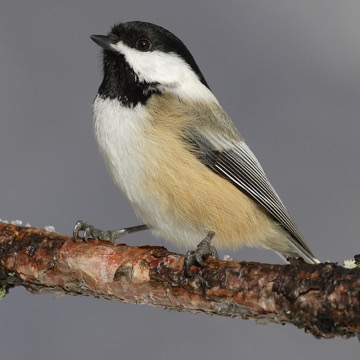 Black-capped Chickadee
Year-round
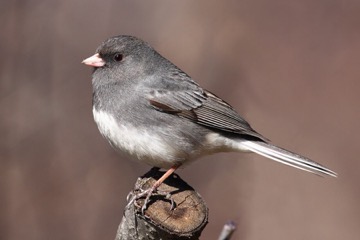 Dark-eyed Junco
Winter visitor
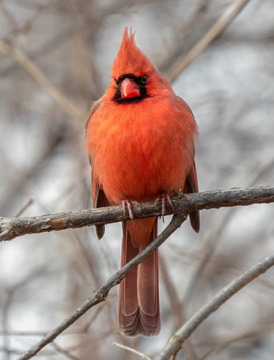 Northern Cardinal
Year-round
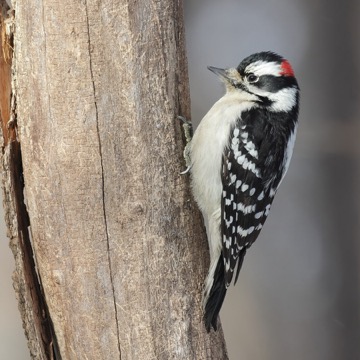 Downy Woodpecker
Year-round
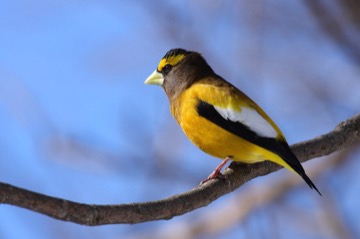 Evening Grosbeak
Irregular
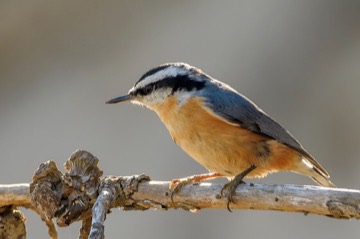 Red-breasted Nuthatch
Year-round
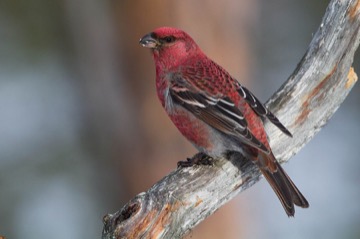 Pine Grosbeak
Irregular
Most often reported at feeders this month. What turns up depends on your region and the weather, so treat it as a starting point.
Feeder jobs for February
- Empty and dry any feeder that has taken on moisture.
- Discard clumped or damp seed rather than topping it up.
- Watch for early nest prospecting in dense shrubs.
Water in February
Keep water ice-free and shallow. If a bath freezes over during the day, birds lose access exactly when drinking water is scarcest.
Species in focus: Evening Grosbeak
Evening Grosbeaks are irruptive: they appear in some winters and not others. When they do come they arrive in flocks and can empty a large hopper quickly, so a bigger feeder and a supply of sunflower help.
- Food
- Sunflower, Mixed seed
- Feeder
- Large hopper
- Season
- Irruptive; mostly winter (northern and western North America)
What to watch for
- Freeze-thaw cycles spoil seed fast. Empty, dry and refill rather than topping up over clumps.
- Check stored seed for damp. Clumped seed is not worth feeding.
- Hygiene still matters in the cold — crowded feeders spread disease whatever the temperature.
- If you see a sick bird, clean and disinfect more often and consider a temporary pause.
Three things not to do
- Don't top up over clumped or damp seed. Empty, dry and refill instead.
- Don't assume cold weather prevents spoilage — freeze-thaw cycles are the problem.
- Don't prune dense evergreens yet. Early nesters may already be prospecting.
Check this locally
Timing shifts with latitude, elevation and the year. Use these as pointers, then check what is actually happening near you.
- North: late-winter cold is still the main constraint on feeding.
- Mid-latitudes: thaw cycles make this the muddiest month for seed quality.
- South: early nesters may already be active; avoid disturbing dense cover.
Questions this month raises
Why does seed clump inside the feeder?
Freeze-thaw cycles let moisture in, and seed that stays damp can go mouldy. Empty the feeder, dry it fully, then refill rather than layering fresh seed on top.
When do birds start nesting?
Some species prospect for sites in late winter, but timing varies by species and region. Avoid heavy pruning of dense evergreens until nesting is clearly under way.
Should I stop feeding before spring?
No, but keep the cleaning routine. Crowded late-winter feeders are a common place for disease to spread.